You don’t need a costly gym membership or special training equipment to lose weight. Some of the best workouts for losing weight at home actually require nothing more than your own body weight, a little space and a commitment to execute them consistently. Whatever your aim might be – whether to lose 10 pounds, improve your overall fitness, or just get more active – working out at home might be a feasible and lasting alternative.
Finding time for fitness is one of the major challenges for many adults in the U.S. Long work hours, remote jobs, family obligations and a sedentary lifestyle sometimes leave little time for regular exercise. Most of these barriers are eliminated with home workouts because you may work out at your convenience. Even 30 minutes of exercise a few times a week can help you burn more calories, improve your cardiovascular health, and better control your weight.
Regular physical activity is one of the most important things you can do to stay at a healthy weight and lower your risk of chronic diseases like heart disease, type 2 diabetes, and high blood pressure, according to research from organizations like the American Heart Association (AHA) and the Centers for Disease Control and Prevention (CDC).
This article guides the weight loss exercises you can do at home and how they work, along with practical suggestions to help beginners create a plan they can keep up with long-term.
What Are the Best Weight Loss Exercises You Can Do at Home?
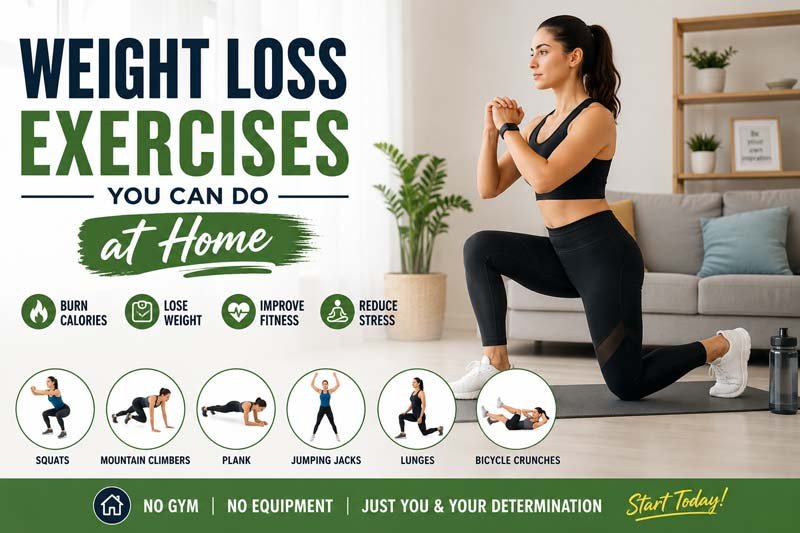
The greatest exercises to lose weight at home are a combination of aerobic and strength training. Squats, lunges, push-ups, mountain climbers, jumping jacks, high knees, planks, and brisk walking are all exercises that burn calories and build strength in major muscle groups. If you do these activities frequently, together with appropriate eating and lifestyle choices, you will lose weight gradually and sustainably.
Why Home Workouts Are Effective for Weight Loss?
There are many people who believe that treadmills, weight machines, or fitness classes are needed to lose weight successfully. They can be useful tools, but they are far from being necessary. The human body responds to movement, no matter where it is. It’s more about how often you do it and whether your lifestyle is set up for a good calorie balance.
Home exercises help make exercise more accessible by reducing common hurdles such as travel to a facility, wait times for equipment, or a monthly charge. They are also more flexible and allow you to include physical activity into your day before work, at lunchtime, or after dinner.
Busy people or those who don’t feel comfortable exercising in a public setting can exercise at home because it creates an environment where they can focus on their own improvement without distractions.
How Exercise Helps You Lose Weight?
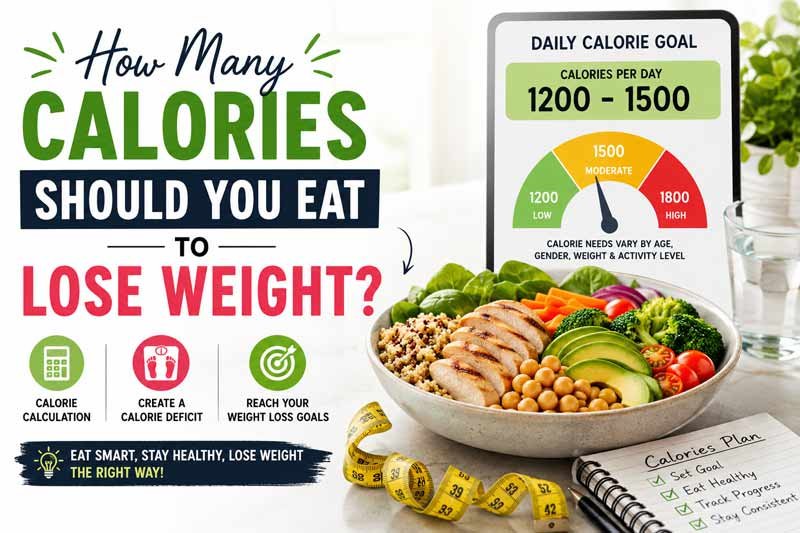
You lose weight when your body is using more energy than it is getting from food and drinks over time. This is often characterized as establishing a calorie deficit. This is where exercise can help. It can burn more calories during the day.
But exercise does much more than burn calories. Regular exercise boosts your metabolism, builds muscle, improves the function of your heart and lungs, and helps balance the hormones that control hunger and fullness.
The table below outlines the ways exercise aids good weight management.
| Exercise Benefit | Why It Matters for Weight Loss |
| Burns Calories | Being active burns more calories every day, which helps you create a calorie deficit. |
| Preserves Lean Muscle | Strength training helps maintain muscle while losing body fat, supporting long-term metabolism. |
| Improves Insulin Sensitivity | Better blood sugar regulation may reduce the risk of metabolic diseases. |
| Reduces Stress | Exercise encourages the release of endorphins, which may decrease emotional eating in some individuals. |
| Improves Sleep Quality | Better sleep supports hormones that regulate appetite and recovery. |
| Boosts Energy Levels | Improved fitness often makes daily movement easier, increasing overall activity throughout the day. |
Instead of just living on diet, you mix nutritious nutrition with regular activity, so you have a more balanced and lasting way to lose weight.
How Much Exercise Is Recommended?
The CDC recommends that most healthy individuals get a minimum of 150 minutes of moderate-intensity aerobic activity a week, in addition to muscle-strengthening activities at least two days a week.
The recommendation can be broken into reasonable sessions. For many, 30 minutes of exercise five days a week is sufficient to satisfy the recommended amount of physical activity.
Also Visit – Best Foods During Pregnancy: Complete Nutrition Guide
Depending on your current weight, eating habits, age, and overall health, increased movement may also be beneficial for individuals wanting to reduce weight. But not every workout is a good exercise. Increasing workout duration and intensity gradually reduces risk of injury while allowing the body to adapt.
Preparing for a Successful Home Workout
Before starting any fitness plan, it is helpful to prepare your environment and your body. A little forethought can go a long way toward better workouts and fewer injuries.
Find an open location to allow for movement, remove anything that may cause you to fall, and wear supportive athletic shoes if your training requires jumping or quick motions. Loose, comfortable gear that doesn’t impede movement also boosts performance.
Always do a little warm-up before the main workout. Warming up gets the heart going, promotes blood supply to functioning muscles, and prepares the joints for motion. 5-10 minutes of marching in place, easy arm circles, shoulder rolls, and light stretching are usually sufficient for most starting workouts.
And just as important, don’t forget to hydrate. Drinking water before and after exercise helps restore fluids lost through sweat, particularly in warmer temperatures or during higher-intensity activities.
Also Visit – How to Improve Your Immune System Naturally
The Best Weight Loss Exercises You Can Do at Home
No exercise burns calories at the same pace, and there’s no one routine that’s appropriate for all. A good plan mixes exercises that get your heart rate up with activities that build big muscular groups. This mix helps in fat loss and protects lean muscular mass.
The following workouts demand little or no equipment and can be easily adjusted for beginners.
1. Bodyweight Squats
Squats are one of the most valuable functional exercises as they work multiple large muscle groups at the same time. Each rep works the muscles of the hips, thighs, glutes, and core, making squats an efficient action for boosting strength and burning calories.
Squats work a lot of muscles at the same time, unlike isolation exercises where you work one muscle group at a time. So, your body burns more calories throughout the exercise. So, squats are a great exercise in a weight loss plan.
For beginners, technique is more important than speed. Position your feet so that they are about the same width apart as your shoulders. Slowly bend your knees, pushing your hips back and keeping your chest up and your back straight. Lower down till your thighs are almost parallel to the floor or as low as you can comfortably go with your mobility. Push your heels to return to the start position.
| Bodyweight Squats | Details |
| Primary Muscles | Quadriceps, glutes, hamstrings, core |
| Difficulty | Beginner to Intermediate |
| Equipment Needed | None |
| Recommended Sets | 2–3 sets |
| Recommended Repetitions | 10–15 per set |
When performed consistently, squats improve lower-body strength, make everyday activities easier, and contribute to better balance and mobility.
2. Walking in Place
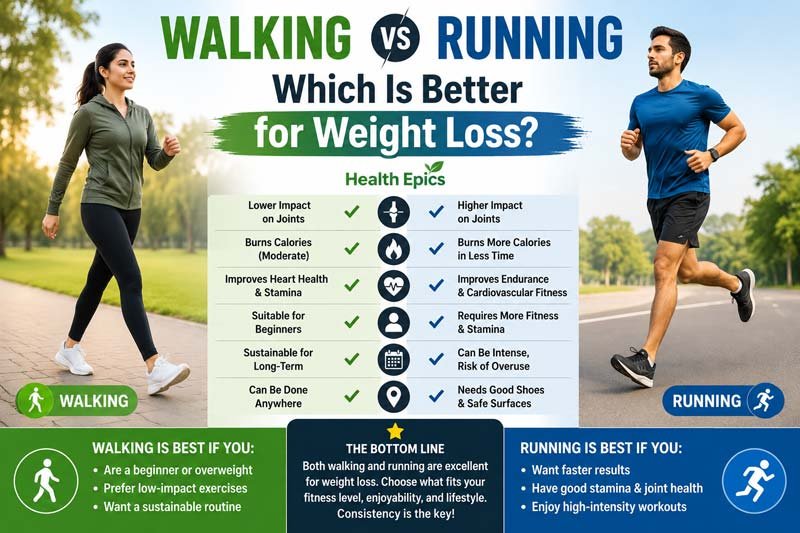
Walking is still one of the safest and most accessible kinds of exercise. Many of the same cardiovascular advantages are gained from walking indoors or marching in place when weather circumstances make it impossible to exercise outdoors.
Walking in place is a gentle way to boost the heart rate without too much stress on the joints, so it is especially good for beginners, older folks, or those getting back into fitness after a long time away.
As your fitness increases, swing your arms more and bring your knees up a little higher for more intensity. Many individuals prefer walking in place while watching television or listening to music, so it’s simpler to keep active and not feel like you’re doing a scheduled workout.
Walking in Place
- Improves cardiovascular fitness
- Low impact on joints
- Beginner friendly
- Helps increase daily calorie burn
- No equipment required
Walking looks deceptively simple, but when done consistently, it can be a game changer for total daily energy expenditure.
3. Push-Ups
Push-ups are one of the most effective upper-body exercises that can be done without equipment. Push-ups are often thought of as a chest-boosting exercise, but they also work your shoulders, arms, and core, making them a great whole-body exercise.
Also Visit – Top 10 Weight Loss Mistakes to Avoid
The regular form is too hard; most beginners think they cannot do push-ups. Fortunately, several adaptations allow almost anyone to get the necessary strength.
Wall push-ups are a wonderful place to start for absolute beginners. When strength progresses, incline push-ups on a firm bench or countertop are the next step. Then you can start doing knee push-ups (again, an intermediate step before going to the normal push-up on the floor).
Push-ups activate numerous muscular groups at once, meaning they also boost calorie burn while building functional strength needed for day-to-day activity.
| Push-Up Variation | Best For |
| Wall Push-Up | Complete beginners |
| Incline Push-Up | Building strength gradually |
| Knee Push-Up | Intermediate beginners |
| Standard Push-Up | Intermediate to advanced fitness |
Don’t focus on a high number of repetitions, but rather on doing every action with good form. Quality repetitions are more beneficial than a fast-paced workout with poor technique.
4. Forward and Reverse Lunges
Lunges are a great lower-body workout for increasing strength, improving balance and coordination, and aiding weight loss. Unlike squats, lunges demand each leg to work individually, which helps correct muscle imbalances and engage stabilizing muscles. This movement also works the core, making it a useful workout that can help with everyday activities like climbing stairs, walking, and lifting objects.
To do a forward lunge, rise tall with your feet together. Take a step forward with one leg and bend your torso until both knees are at approximately 90 degrees. Make sure your front knee stays behind your toes and in line with your ankle. Press through your front heel to get back to the beginning posture, then change sides.
Also Visit – Weight Loss Tips for Women Over 30: Complete Guide
If forward lunges don’t seem comfortable, reverse lunges are a nice substitute. Generally, going backward is easier on your knees but still provides equivalent benefits in terms of gaining strength.
| Exercise Details | Information |
| Primary Muscles | Quadriceps, glutes, hamstrings, calves, core |
| Difficulty | Beginner to Intermediate |
| Equipment | None |
| Recommended Volume | 2–3 sets of 10–12 repetitions per leg |
Adding lunges into your weekly plan will assist in building strength in the lower body and increase the calories expended throughout each session.
5. Mountain Climbers
Mountain climbers are one of the best bodyweight exercises for people who want to lose weight at home since they provide you with an aerobic workout and full-body strength training. Your heart rate shoots up rapidly, and your shoulders, chest, stomach muscles, hips, and legs all remain engaged since the movements are constant.
Begin in a high plank, hands just beneath your shoulders, your body in a straight line from your head to your heels. Keep your upper body still, pull one knee up to your chest, then quickly switch legs in a sprinting action.
As a beginner, do the exercise gently until you have mastered the correct technique and then gradually speed up.
Mountain Climbers
- Burns calories efficiently
- Improves cardiovascular endurance
- Strengthens the core
- Requires equipment
- Suitable for home workouts
In your initial few workouts, go for 20-30 seconds, then increase that time as your endurance builds.
6. Jumping Jacks
For decades, jumping jacks have been a staple in exercise programs because they are simple, effective, and require no equipment. This is a full-body aerobic exercise that gets your heart rate up rapidly and builds coordination and endurance.
Stand with your feet together and arms at your sides. Jump your feet apart and at the same time raise your arms aloft. Return to the start and keep going at a steady rhythm.
If you have joint pain or limited movement, you can do the exercise by stepping one foot out to the side rather than jumping. This low-impact modification still raises the heart rate, but without putting too much strain on the knees or ankles.
| Comparison | Standard Version | Low-Impact Version |
| Calorie Burn | Higher | Moderate |
| Joint Impact | Moderate | Low |
| Beginner Friendly | Yes | Excellent |
| Equipment Needed | None | None |
Jumping jacks make a good warm-up activity or as a circuit workout between strength-training exercises.
Also Visit – Walking vs Running: Which Is Better for Weight Loss?
7. High Knees
High knees are another great cardio workout that can be done in a small space. This exercise improves the hip flexors, quads, calves, and abs, while raising the heart rate and improving coordination.
High knees are a progression from jogging in place because you have to lift your knees to waist height, using more muscles and burning more energy. If you are a beginner, start by marching gently and then speed up your pace.
Adding short bursts of high knees (20 to 40 seconds) between strength exercises can add a significant intensity boost to your workout without lengthening the session.
8. Planks
Planks aren’t continuous movement but they are still one of the most important workouts to improve core strength. A stronger core helps you improve your posture, increase your balance and make many other workouts safer and more effective.
To do a classic forearm plank, get down on the floor on your forearms, with your elbows right under your shoulders. Straighten your legs behind you, keeping a straight line from head to heels. Keep your hips from dropping down or lifting too high.
Many beginners misjudge the difficulty of this exercise. In the initial couple of weeks of training, holding good form for 20 to 30 seconds is frequently adequate.
| Plank Progression | Hold Time |
| Beginner | 20–30 seconds |
| Intermediate | 45–60 seconds |
| Advanced | 60–90 seconds |
When your core is stronger, you can add side planks or shoulder taps for a tougher workout.
Also Visit – Best Morning Drinks for Weight Loss Guide
9. Burpees
Burpees are one of the most intense bodyweight workouts, as they combine strength training and cardiovascular conditioning in one action. Traditional burpees are a squat, plank, push-up, and jump, and are a difficult exercise for the whole body.
Burpees are great for burning calories but not necessarily for everyone. For beginners, it is recommended to create a base of strength with squats, planks, and reduced push-ups before doing complete burpees.
There’s a variant if you’re a beginner that skips the leap and push-up, but keeps the same movement pattern. The change has less impact but retains most of the advantages of the workout.
10. Dancing
Working out doesn’t have to be the “same old thing” to be beneficial. Dancing is a fun method to get more physical activity and improve your coordination, endurance and happiness. Whether you follow an online dance workout or simply move to your favorite music, dancing is an easy way to get a cardiovascular workout for people of all ages.
A lot of grownups find that they’re more apt to stick with something they really enjoy. Dancing may also lower stress that can indirectly contribute to better eating practices for people who struggle with emotional eating.
Combining Cardio and Strength Training for Better Results
A lot of beginners wonder whether it’s better to do cardio or strength training to lose weight. The answer is that both are important yet they perform different functions.
During cardiovascular exercise, you burn most of your calories during the activity. Brisk walking, jumping jacks and high knees increase the heart rate and improve cardiovascular health.
Strength training, on the other hand, assists to maintain lean muscle while eliminating body fat.
Maintaining muscle mass is crucial because muscular tissue needs more energy to maintain than fat tissue. It may not burn as many calories during the workout as intensive aerobics, but strength training fosters long-term metabolic health and functional fitness.
| Cardio Training | Strength Training |
| Burns more calories during exercise | Helps preserve lean muscle |
| Improves heart and lung health | Improves strength and posture |
| Enhances endurance | Supports bone health |
| Excellent for beginners | Essential for long-term weight management |
The best home workout plan involves both kinds of exercise over the week.
Sample 30-Minute Home Weight Loss Workout
Don’t know how to use these exercises? The following routine is a good, balanced plan for beginners.
| Workout Segment | Duration |
| Warm-up (marching in place, arm circles) | 5 minutes |
| Bodyweight Squats | 45 seconds |
| Walking in Place | 1 minute |
| Push-Ups | 45 seconds |
| Mountain Climbers | 30 seconds |
| Lunges | 45 seconds |
| High Knees | 30 seconds |
| Plank | 30 seconds |
| Rest | 60 seconds |
| Repeat the circuit | 3 rounds |
| Cool-down and stretching | 5 minutes |
This workout blends strength-building motions with cardio workouts, helping to increase fitness and calorie burn in a relatively short amount of time.
Creating a Weekly Home Exercise Routine
It is more vital to be consistent than to do really extensive workouts. Having a realistic weekly routine makes it easier to build enduring habits.
| Day | Recommended Activity |
| Monday | Full-body strength workout |
| Tuesday | Brisk walk or low-impact cardio |
| Wednesday | Home circuit training |
| Thursday | Stretching or yoga |
| Friday | Full-body strength workout |
| Saturday | Dance workout or outdoor walk |
| Sunday | Active recovery and mobility exercises |
This balanced approach helps the muscles to recover sufficiently while maintaining overall activity levels high.
Why Consistency Matters More Than Perfection
Unrealistic expectations are one of the top reasons individuals give up on training plans. Many people expect to see a major weight loss in a few weeks and feel frustrated when they are not getting the results they want as fast as they wished.
Weight loss should be slow and steady. Those little wins like one more rep, walking a little further before you get tired, or feeling stronger in your everyday tasks are all good signals that your body is changing healthily.
Also Visit – Weight Loss Tips for Men: The Complete Guide to Losing Fat Naturally
Don’t shoot for flawless workouts; shoot for a schedule that matches your lifestyle. Missing an exercise is not failing; the key to long-term success is getting back to your schedule the next day.
Fitness needs to be a permanent habit and not just a short-term challenge.
Common Mistakes That Can Slow Weight Loss
Some behaviors can hold you back even if you are working out regularly. Weight reduction is influenced by many lifestyle factors such as nutrition, sleep, stress management, and daily activity levels. If you know these typical blunders, you can get better results and keep expectations realistic.
| Common Mistake | Why It Can Affect Weight Loss | Better Approach |
| Exercising without paying attention to nutrition | It’s easy to consume more calories than you burn, reducing the calorie deficit needed for weight loss. | Pair regular exercise with a balanced, portion-controlled diet rich in whole foods. |
| Doing the same workout every day | Your body adapts to repetitive exercise, which may reduce improvements in strength and endurance over time. | Include a variety of cardio, strength, flexibility, and mobility exercises each week. |
| Skipping warm-ups and cool-downs | Beginning intense exercise without preparing your muscles may increase the risk of injury and soreness. | Spend five to ten minutes warming up before exercise and stretching afterward. |
| Expecting immediate results | Healthy weight loss takes time, and rapid changes are often difficult to maintain. | Focus on consistent habits rather than short-term outcomes. |
| Ignoring recovery | Muscles need adequate rest to repair and become stronger. | Schedule at least one active recovery or rest day each week. |
| Sleeping too little | Poor sleep may affect hormones that regulate hunger, appetite, and energy levels. | Aim for seven to nine hours of quality sleep most nights. |
Understanding these factors helps create a healthier and more sustainable approach to weight management.
Frequently Asked Questions
Which are the Best weight loss exercises to do at home?
The best home exercises for weight loss are bodyweight squats, push-ups, lunges, mountain climbers, jumping jacks, high knees, planks, brisk walking, dancing, and burpees. Combining aerobic exercise with strength training usually offers the most overall benefits.
Can I get thinner by exercising at home daily?
Yes, lots of people can lose weight with regular home workouts, especially when exercise is accompanied by a healthy diet. However, everyday workouts should involve variation in intensity and allow for proper recovery to help prevent overuse injuries.
How long should I work out at home to lose weight?
Most individuals need 30 to 60 minutes of moderate physical activity most days of the week. Those who are new to the activity can begin by exercising for a shorter period of time and then slowly build up the length of time and intensity of the workout as they become more physically fit.
What home exercise burns the most calories?
Generally, higher-intensity exercises like burpees, mountain climbers, jumping jacks, jump rope, and high knees burn more calories than lower-intensity ones. The actual number of calories burned varies based on body weight, intensity, and length of the workout.
Are these exercises safe for beginners?
Yes. Most of these workouts can be adapted for various fitness levels. Wall push-ups, chair squats, low-impact jumping jacks, and walking in place are good options for beginners.
Is walking enough to lose weight?
Walking is a fantastic low-impact activity that helps with calorie burning and cardiovascular health. For many people, walking plus strength-training routines give greater overall fitness advantages and promote long-term weight management.
Do I need tools to work out at home?
No. There are plenty of good workouts that employ only your own body weight. As your fitness develops, optional equipment such as resistance bands or adjustable dumbbells can add variation, but they are not essential to start.
How many days a week should I work out?
Current guidelines encourage at least 150 minutes of moderate-intensity aerobic activity per week and muscle-strengthening activities on two or more days per week. Most people do this by exercising four to five times each week.
Conclusion
You don’t have to make home exercises for efficient weight loss complicated. You may become stronger, burn more calories, and improve your overall fitness level without having to spend lots of money on equipment or a gym membership with basic exercises like squats, lunges, push-ups, planks, marching in place, mountain climbers, and jumping jacks.
Remember, exercise is only one piece of the puzzle in a good weight loss plan. Sustainable effects are supported by regular physical exercise, balanced nutrition, decent sleep, proper hydration, and stress management. Don’t try to find fast cures; rather, build behaviors that you can sustain in the long run.
Any exercise is better than none, even if it is only a little. Begin where you are, go at a speed that is comfortable, and take time to appreciate the minor wins. By exercising patience, consistency, and maintaining realistic expectations, you may transform home exercises into a robust basis for enduring weight management and holistic well-being.