If you’ve ever tried to reduce weight, you’ve probably heard conflicting advice: “Carbs are the enemy,” “Skip breakfast,”. Social media celebrities are pushing detox drinks and “fat-burning” remedies. With so much information online, it can be hard to tell the difference between weight loss myths and reality.
Whether you want to lose 10 pounds or 100 pounds, knowing the facts can help you avoid common mistakes, save money, and build healthy habits that really work.
What Are the Biggest Weight Loss Myths?
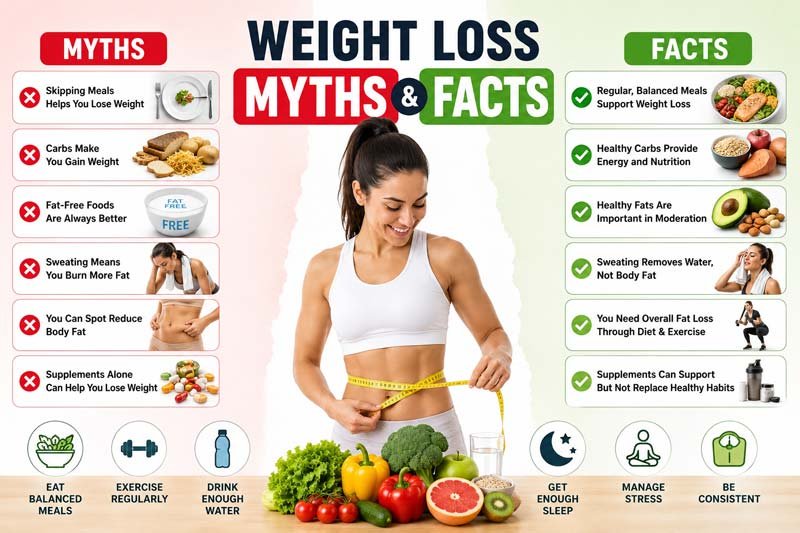
Many popular weight loss techniques are not scientifically supported. Common myths include the following:
- Weight is always gained from carbohydrates.
- Skipping meals makes you lose weight faster.
- Fat burners break down fatty tissue.
- Eating after 8 p.m. automatically means you gain weight.
- You need to exercise for hours every day.
- Detox diets help to flush toxins and increase fat burning.
- All calories have the same effect on the body.
- Healthy foods can be consumed in any quantity.
The truth is sustainable weight reduction comes down to being in a calorie deficit through healthy eating habits, frequent exercise, sufficient sleep, and consistency over term.
What Are the Biggest Weight Loss Myths?
Many of the common weight reduction myths are more about marketing than science. Some myths have been around for decades, while others have been popularized by social media and celebrity endorsements. The truth is, sustainable weight loss is all about adopting healthy habits you can stick with.
Common Weight Loss Myths
| Myth | What Science Says |
| Carbs always make you gain weight. | Whole-food carbohydrates can support healthy weight loss. |
| Skipping meals burns more fat. | It may increase hunger and lead to overeating later. |
| Detox diets remove toxins. | Your liver and kidneys naturally detoxify your body. |
| Eating after 8 p.m. causes weight gain. | Total daily calorie intake matters more than meal timing. |
| Fat-burning supplements melt fat. | Most have limited scientific evidence and are not magic solutions. |
| Exercise alone guarantees weight loss. | Healthy eating and physical activity work best together. |
Why Do Weight Loss Myths Spread So Easily?
In the United States, the weight loss industry is worth several billion dollars. Every year, firms release new diets, supplements, meal plans, and workout plans that promise quick results with no effort. Such statements are attractive because they provide easy answers to difficult problems.
Social media has only made the problem worse, with personal success stories spreading much quicker than scientific proof. Individual experiences can be inspirational but don’t necessarily work for everybody. Genes, age, medical issues, how active you are, how well you sleep, stress, and what you eat all influence body weight.
Another reason myths remain is that many individuals want immediate outcomes. The problem is that sustainable weight loss is usually a slow process, while fad diets promise rapid results in weeks. Unfortunately, those rapid outcomes are often generated by the loss of water, not the loss of fat.
Myth #1: Carbohydrates Always Cause Weight Gain
Many people cut out bread, rice, fruit and other carbohydrate-dense foods because they think carbs immediately make you put on weight. Reducing highly processed carbs may help some people reduce their calorie intake, but you don’t need to cut out all carbs to maintain a healthy weight.
Carbohydrates are the energy your body prefers. They are the fuel for your brain, your muscles and your daily doings. The main difference is the type of carbohydrates you pick.
Whole Carbohydrates vs. Refined Carbohydrates
| Better Choices | Limit More Often |
| Oatmeal | Sugary breakfast cereals |
| Brown rice | White pastries |
| Sweet potatoes | Candy |
| Beans and lentils | Sweetened beverages |
| Fresh fruit | Doughnuts |
Myth #2: Skipping Breakfast Helps You Lose Weight Faster
Breakfast has been considered the most important meal of the day for ages, yet in today’s diet trends, skipping it is encouraged. But the reality is more complex.
Studies have shown that skipping breakfast doesn’t necessarily contribute to weight loss. Some people would naturally eat fewer calories by having a late first meal, while others will get really hungry and eat more food later in the day.
Whether breakfast is beneficial relies a lot on your lifestyle, preferences, and your general eating pattern.
Potential Effects of Skipping Breakfast
| Possible Benefit | Possible Drawback |
| May reduce calorie intake for some individuals. | Increased hunger later in the day. |
| Can fit certain intermittent fasting schedules. | Greater likelihood of overeating at dinner. |
| Simplifies meal planning. | Lower morning energy and concentration for some people. |
Myth #3: Fat Makes You Fat
For years, low-fat diets reigned in the nutrition world. So, a lot of individuals still think that dietary fat causes body fat.
Indeed, good fats are necessary for the proper functioning of the body. They also assist your body in absorbing fat-soluble vitamins, making hormones, protecting organs, and boosting brain function. Fat has more calories per gram than carbohydrates or protein, so the key is to choose healthier sources and watch portion sizes.
Healthy vs. Less Healthy Fat Sources
| Choose More Often | Limit More Often |
| Avocados | Fried foods |
| Olive oil | Processed meats |
| Salmon | Foods containing trans fats |
| Walnuts | Heavy cream sauces |
| Chia seeds | Deep-fried fast food |
| Almonds | Highly processed snack foods |
Myth #4: Detox Diets Are Necessary to Lose Weight
Detox drinks, cleanses, teas and restrictive eating regimes typically claim to “flush toxins” and hasten weight reduction. Such claims are very enticing, especially after holidays or vacations, when many people are looking to reset their eating habits.
But there is little scientific proof that commercial detox treatments help eliminate toxins or offer long-term weight-loss benefits.
Your body already has a good detoxifying system that is always working.
| Organ | Primary Function |
| Liver | Breaks down harmful substances and processes nutrients. |
| Kidneys | Filter waste products from the blood. |
| Lungs | Remove carbon dioxide during breathing. |
| Digestive system | Eliminates waste through normal digestion. |
| Skin | Helps regulate body temperature through sweating. |
Many detox diets cause quick weight loss because they dramatically restrict calorie intake. A lot of this early weight is water and stored carbs, not body fat. When normal eating resumes, the lost weight generally comes back.
A healthy strategy is to support your body’s natural processes by eating more fruits and vegetables, drinking enough water, getting great sleep, keeping physically active, and reducing excessive alcohol usage.
Myth #5: You Have to Exercise for Hours Every Day
Many beginners delay starting a fitness regimen because they think that to lose weight they have to spend many hours in the gym every day. This erroneous belief keeps many from ever trying.
The science paints a different picture. Even moderate amounts of frequent exercise are incredibly helpful for your health. The CDC advises people to get at least 150 minutes a week of moderate-intensity aerobic activity and muscle-strengthening activities on two or more days a week.
Regular brisk walking (30 minutes five times a week) in combination with strength training and a healthy diet can make a major impact on your weight and overall health.
Myth #6: Eating Late at Night Automatically Causes Weight Gain
One of the most frequent fallacies in nutrition is that if you eat beyond a specific time (typically 7 pm or 8 pm), your body will accumulate extra fat. This theory has been around for years, but evidence reveals that the total number of calories you eat throughout the day has a significantly higher impact on body weight than the time of day you eat.
That doesn’t mean there’s no problem with late-night eating. When you watch television or work late, many of us nibble on foods that are high in calories, such as chips, cookies, ice cream, or pizza. Eating like this can lead to an increase in daily calories with no nutritional value.
Many people who work shifts, healthcare workers, and people with unusual schedules eat later in the evening and are still healthy weights as long as the entire diet is balanced.
Myth vs. Fact
| Myth | Fact |
| Eating after 8 p.m. causes fat gain. | Weight gain results from consistently consuming more calories than your body uses, regardless of the time of day. |
| Your metabolism shuts down at night. | Your body continues using energy 24 hours a day, even while you sleep. |
Myth #7: Fat-Burning Supplements Melt Away Body Fat
Each year, the supplement business makes billions of dollars selling products that promise to enhance metabolism, reduce hunger, or melt fat away fast.
These ads can sound compelling, but the science offers a different picture.
Some supplements can come with hazards, such as increased heart rate, higher blood pressure, digestive issues and interactions with prescription drugs.
Popular Supplements and the Evidence
| Supplement | What Research Suggests |
| Green tea extract | May provide a very small increase in calorie burning, but results are inconsistent. |
| Garcinia cambogia | Limited evidence for meaningful weight loss. |
| Raspberry ketones | Insufficient human research. |
| Apple cider vinegar | May slightly increase fullness but is not a fat-burning solution. |
| Caffeine | Can temporarily increase energy expenditure but should not replace healthy habits. |
Myth #8: Exercise Alone Is Enough to Lose Weight
Exercise is an important aspect of a healthy lifestyle, but eating has the biggest effect on weight loss.
For example, a 30-minute vigorous walk may burn about 150 to 200 calories. But a big fast-food shake might pack in more than 700 calories. It’s far easier to ingest those extra calories than to expend them through activity alone.
That doesn’t mean exercise isn’t necessary. Movement on a regular basis is good for almost every area of health.
Benefits of Regular Exercise Beyond Weight Loss
| Benefit | Why It Matters |
| Improves heart health | Lowers the risk of cardiovascular disease. |
| Builds muscle | Helps maintain metabolism during weight loss. |
| Enhances mood | Physical activity reduces stress and anxiety. |
| Improves insulin sensitivity | Supports healthy blood sugar control. |
| Strengthens bones | Reduces the risk of osteoporosis as you age. |
Myth #9: You Can Spot Reduce Fat
There are several advertising claiming exercises that get rid of belly fat, arm fat or thigh fat. Unfortunately, the body doesn’t work that way.
Where the body loses fat when you lose weight is mostly a matter of genetics, hormones, age and sex. Hundreds of sit-ups will tone your abs, sure, but won’t directly burn belly fat.
Spot Reduction vs. Total Fat Loss
| Goal | Reality |
| Hundreds of crunches for a flat stomach | Strengthens abdominal muscles but doesn’t specifically remove belly fat. |
| Arm exercises to reduce arm fat | Builds muscle but doesn’t target fat loss in one area. |
| Full-body exercise and healthy eating | Supports overall fat loss throughout the body. |
If you want to burn abdominal fat, you need to focus on:
- Being in a calorie deficit
- Strength training 2-3 times a week
- Consistent aerobic activity
- Sufficient protein intake
- Consistent sleep patterns
Body fat is reduced over time, not from one specific place, but in several regions.
Myth #10: Crash Diets Produce Long-Term Results
Crash diets sometimes promise extreme benefits in a short time frame, by severely limiting calories or removing whole food groups. You can lose weight quickly at first, but a lot of it is water and glycogen, not body fat.
Plus, cutting calories too low will slow your metabolism, decrease muscle, and raise your hunger hormones. This results in many people regaining the weight when they return to their normal eating habits.
Crash Diets vs. Sustainable Weight Loss
| Crash Diet | Sustainable Approach |
| Very low-calorie intake | Moderate calorie deficit |
| Quick initial weight loss | Gradual, steady fat loss |
| Difficult to maintain | Easier to follow long term |
| Higher risk of weight regain | Better long-term success |
| May reduce muscle mass | Helps preserve lean muscle with adequate protein and exercise |
Experts generally recommend aiming to lose 1 to 2 pounds per week, a pace that is more likely to support long-term success.
Conclusion
Understanding the difference between weight loss myths and facts by Health Epics could help you make more specific decisions about your health. Social media trends and fad diets may promise the temptation of a quick fix, but for sustainable success you need to adopt evidence-based solutions that work with your lifestyle and your needs.
Concentrate on balanced meals, regular exercise, good sleep, stress management, and realistic goals rather than removing entire food groups, supplementing, or hunting for the quick fix.
Remember that losing weight the healthy way is a journey, not a race. Slow growth is better than hasty cures, and it’s better to build enduring habits. You will be better off dispelling popular ideas and replacing them with scientifically informed facts so that you may get better results and improve your overall health.
Frequently Asked Questions (FAQ)
1. What is the biggest deception regarding weight loss?
One of the biggest deceptions is that you get fat from eating carbohydrates. The truth is, weight gain is caused by eating too many calories (not simply carbs). Whole grains, fruits, vegetables, and legumes can be part of a balanced weight-loss diet.
2. Can you lose weight without exercise?
Yes, you can lose weight by simply eating less. Regular exercise with a nutritious diet is useful for maintaining muscle, improving heart health, and making it easier to maintain weight loss over time.
3. Does eating at night cause weight gain?
Not always. The timing of your meals may not be as significant as other factors, such as your overall eating habits and total calories ingested during the day.
4. Do low carb diets work better for weight loss?
Low carb diets can work for some people to lose weight, but they’re not the only way. Eating healthy can help you lose weight as long as it results in a calorie deficit that you can maintain.
5. Do Supplements for Fat-Loss Work?
Most fat-burning drugs give little, if any, meaningful weight loss benefit. Healthy food, exercise, and lifestyle changes still are the best way to go.
6. Drinking more water helps me lose weight?
Water is beneficial for overall health and may help reduce calorie intake by increasing fullness or by substituting for sugary drinks. However, water alone does not burn body fat.
7. How fast should I lose weight?
Rapid weight loss is not a good method to lose weight, and most health specialists recommend a weight reduction of 1 to 2 pounds a week, as this is a more sustainable approach to weight.
8. Do You Need Breakfast for Weight Loss?
Not for everyone. Some people enjoy having breakfast, but others do better on different meal patterns. The best way is to find a way to easily keep your nutrition balanced.
9. Why do crash diets generally fail?
Extreme diets are hard to stick to, and can result in muscle loss, increased hunger and weight gain when normal eating resumes.
10. Do healthy foods make you gain weight?
Yes, even healthy food has calories, and if you always eat big portions, you could be putting on weight.
Final Thought
There’s no magic food, supplement, or shortcut for long-term weight loss. The evidence is very consistent: eat good food, make moving your body a routine, prioritize sleep, and be patient with the process. The best way to reach and maintain a healthy weight is to replace misinformation with evidence-based habits.