You’ve undoubtedly wondered how many calories should you eat to lose weight if you’ve ever attempted to do so. It’s one of the most frequently asked questions by Americans who want to maintain a healthy lifestyle, lose body fat, and enhance their health.
Calorie Guide: Eat Smart and Lose Weight
Not everyone has the same response. Age, sex, height, weight, degree of activity, and general health all affect how many calories you should consume. Sustainable weight loss typically involves creating a calorie loss while still addressing your body’s nutritional demands, despite the fact that many diets promise rapid results.
The Centres for Disease Control and Prevention (CDC) recommend that healthy weight reduction usually happens at a rate of one to two pounds per week. Reducing calorie intake, increasing physical activity, or combining both strategies are frequently necessary to achieve this goal.
You’ll discover how calories impact weight reduction, how to calculate your caloric requirements, and useful tactics to promote sustained success in this guide by Health Epics.
What Is Calorie Intake for Weight Loss?
Your body uses calories as units of energy for all bodily processes, including breathing, digestion, movement, and exercise. Energy balance is a crucial idea when talking about how many calories you should eat to lose weight.
Calorie Surplus
Your body burns less calories than you take in.
Result:
- Gaining weight
- A rise in body fat
Calorie Maintenance
Your calorie intake and expenditure are roughly equal.
Result: Consistent weight
Calorie Loss
Your body burns more calories than you take in.
Result: Loss of weight
Most people need to continuously maintain a calorie loss over time in order to lose weight.
A weekly weight reduction of around one pound can be achieved with a daily calorie loss of about 500, whereas a weekly weight loss of about two pounds may be achieved with a daily calorie loss of about 1,000. Individual results, however, differ.
Causes and Risk Factors for Excess Weight Gain
You can set a reasonable calorie goal if you know why weight gain happens.
Sedentary Lifestyle – Many Americans commute, sit at desks, or watch screens for extended periods of time.
Portion Distortion – People frequently underestimate the number of calories in packaged foods and restaurant meals.
Fast Food Consumption – Fast food’s big servings and high fat content can lead to excessive calorie intake when consumed often.
Sugary Beverages – Fast food’s big servings and high fat content can lead to excessive calorie intake when consumed often.
Lack of Sleep – Lack of sleep has an impact on hunger hormones and may heighten cravings.
Chronic Stress – Stress can lead to increased calorie intake and emotional eating.
Medical Conditions – Weight gain may result from a number of medical issues, such as:
- Hypothyroidism
- PCOS, or polycystic ovarian syndrome
- insulin Resistance
- Depression
Aging – As people age, their metabolism tends to slow down a little, especially if their muscle mass decreases.
Signs You May Be Consuming Too Many Calories
While there isn’t a single sign of consuming too many calories, typical symtoms include:
- A gradual increase in weight
- A widening waist
- Low amounts of energy
- Regular eating but frequent hunger
- Having trouble fitting into clothes
- High blood pressure
- Higher levels of cholesterol
Benefits of Maintaining the Right Calorie Intake
Determining the right calorie intake for weight loss can have a major positive impact on one’s health.
Sustainable Weight Loss – While lowering body fat, a reasonable calorie loss helps maintain muscle mass.
Better Energy Levels – Consistent energy throughout the day is supported by a balanced diet.
Improved Blood Sugar Control – Maintaining a healthy diet can aid in blood sugar stabilization.
Reduced Risk of Chronic Disease – Losing weight may reduce the chance of:
- Diabetes type 2
- Heart conditions
- A stroke
- Some types of cancer
Better Mobility – Joint stress can be reduced by losing extra weight.
Improved Mental Well-Being – As they move closer to their health objectives, many people report feeling happier and more confident.
How Many Calories Should You Eat to Lose Weight?
The majority of individuals desire an answer to this question.
Although every person’s needs are different, general guidelines offer a helpful place to start.
Women
Federal dietary recommendations state that:
- For maintenance, sedentary women should consume 1,600–2,000 calories per day.
- Women who are moderately active: 1,800–2,200 calories
- Women who are active: 2,000–2,400 calories
Many women may require roughly the following in order to lose weight:
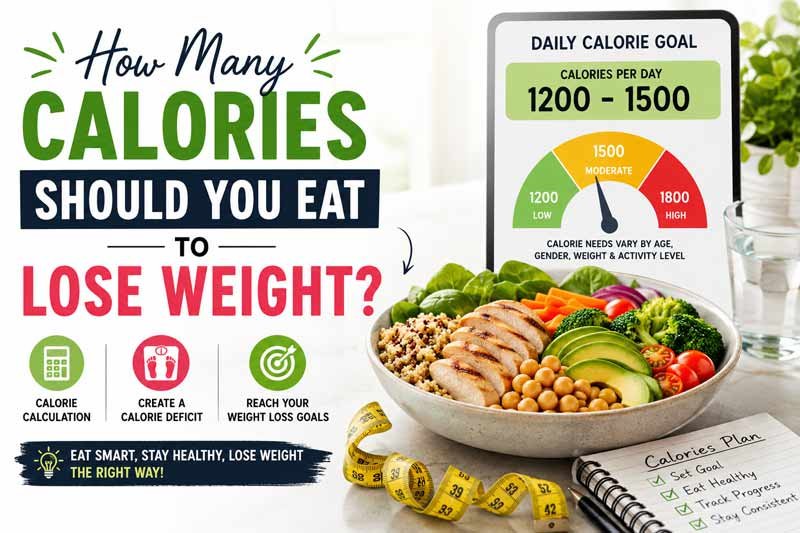
- Depending on size and degree of activity, 1,200–1,800 calories per day.
Men
Weight loss tips for men, among the requirements for general maintenance are:
- Men who are sedentary: 2,000–2,400 calories
- Men who are moderately active: 2,200–2,800 calories
- Men who are active: 2,400–3,000 calories
Many men may need the following in order to lose weight:
- Depending on personal circumstances, 1,500–2,500 calories each day.
Example
A 45-year-old woman who works a desk job and weighs 180 pounds might keep her weight at about 2,000 calories per day. Gradual weight loss may be supported by cutting calories to roughly 1,500 per day while increasing physical exercise.
Understanding Total Daily Energy Expenditure (TDEE)
The total number of calories your body burns every day is represented by your Total Daily Energy Expenditure (TDEE).
TDEE consists of:
Basal Metabolic Rate (BMR) – calories required for essential bodily processes.
Physical Activity – everyday home workout plan without equipment.
Thermic Effect of Food – During digestion, calories are burned.
Non-Exercise Activity Thermogenesis (NEAT) – Calories consumed by routine tasks like:
- Walking
- Cleaning
- Gardening
- Standing
Increasing regular activity can greatly enhance weight loss results.
Best Natural Solutions for Creating a Healthy Calorie Loss
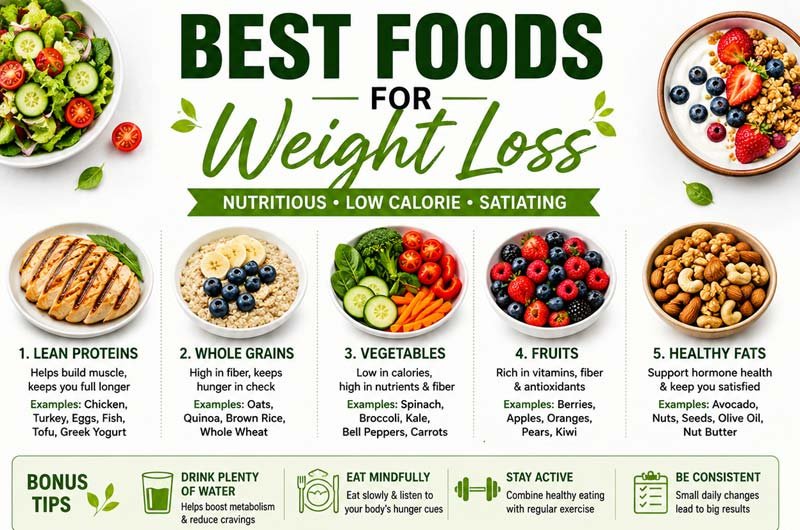
Prioritize Protein – Protein helps maintain muscle and lessen appetite.
Excellent resources include of:
- Chicken breast
- Fish
- Eggs
- Greek yogurt
- Cottage cheese
- Tofu
Increase Fiber Intake – Fiber contributes to feelings of fullness.
Among the sources are:
- Fruits
- Vegetables
- Beans
- Whole grains
Drink More Water
- Thirst is sometimes confused with hunger.
- Before eating, consider having a glass of water.
Improve Sleep Quality – Aim for seven to nine hours each night.
Manage Stress – Consider:
- Meditation
- Yoga
- Walking
- Deep breathing exercises
- Morning workout
Best Foods for Americans Trying to Lose Weight
Some foods assist control calorie intake while offering great nutritional value.
Eggs – superior filling and protein.
Greek Yogurt – Packed with healthy probiotics and protein.
Oatmeal – gives long-lasting fiber and energy.
Leafy Greens – nutrient-rich and low in calories.
Salmon – promotes heart health and fullness.
Beans and Lentils – include both fiber and protein.
Berries – naturally sweet and low in calories.
Apples – high fibre and water content.
Cottage Cheese – outstanding ratio of protein to calories.
Air-Popped Popcorn – When made without too much butter, it’s a satisfying snack.
Best Exercises and Lifestyle Changes
Reducing calories is most effective when paired with exercise.
Walking
An easy exercise that works.
Try to do: 7,000–10,000 steps every day
Strength Training
Aids in maintaining muscle mass while losing weight.
Try to do: Two to three sessions per week
Cardio Exercise
- Cycling
- Swimming
- Jogging
- Hiking
- Full body workout
- Yoga
Increase Daily Movement
• Using the stairs
• Stand up throughout meetings
• Going for walks following healthy breakfast meals
Meal Planning
Meal planning helps cut down on fast food expenditures and impulsive eating.
Common Mistakes to Avoid
Eating Too Few Calories – Very low-calorie diets could:
- A sluggish metabolism
- A rise in appetite
- Lead to nutritional loss
Ignoring Protein – Muscle loss may be exacerbated by a low protein diet.
Drinking Calories – Many drinks supply calories without encouraging feelings of fullness.
Overestimating Exercise Calories – Calorie burn is frequently overestimated by fitness monitors.
Skipping Meals – Later overeating can result from missing meals.
Relying on Fad Diets – Most short-term diets fail to deliver long-term success.
Also visit – Top Ayurvedic Herbs and Their Benefits
Risks and Precautions
While cutting calories is necessary to lose weight, too much restriction can be detrimental.
Among the possible dangers are:
- Fatigue
- Nutrient deficiencies
- Muscle loss
- Hormonal changes
- Reduced exercise performance
Consult a healthcare provider if you:
- Have diabetes
- pregnant
- Have an eating disorder history
- Take medications affecting appetite or weight
Expert Tips for Long-Term Success
- Prioritize consistency above perfection.
- Monitor food consumption on a regular basis.
- Consume protein at each meal.
- Focus meals on vegetables.
- Restrict sugar-filled beverages.
- Select whole foods more frequently.
- Track development every month.
- Engage in everyday physical activity.
- Get enough rest.
- Have patience with the procedure.
Losing weight in a healthy way is a journey, not a race.
Frequently Asked Questions
In order to lose weight, how many calories should I consume each day?
While many males lose weight on 1,500–2,500 calories per day, the majority of women lose weight on 1,200–1,800 calories per day. Everybody has different needs.
Are 1,200 calories a day sufficient for weight loss?
1,200 calories might help some petite women lose weight. For many adults, though, it might be too low.
To lose one pound each week, how many calories should I cut?
A weekly weight loss of almost one pound might be achieved with a daily calorie loss of about 500.
What is the quickest weight reduction rate that is safe?
Generally speaking, the CDC advises reducing one to two pounds every week.
Can I reduce my weight without keeping track of my calories?
Indeed. Enhancing food quality, controlling portion sizes, and engaging in physical activity help many people lose weight.
How can I figure out how many calories I need for maintenance?
A Total Daily Energy Expenditure (TDEE) calculator based on age, sex, height, weight, and activity level can be used to predict maintenance calories.
Which foods naturally lower calorie intake?
Vegetables, fruits, whole grains, legumes, and foods high in protein can all contribute to feeling fuller.
In a calorie loss, why am I not losing weight?
Inaccurate tracking, water retention, decreased exercise, drug side effects, or underlying medical issues are common causes.
In order to lose weight, how many calories should a woman consume?
Depending on their body size and degree of activity, many women lose weight on 1,200–1,800 calories per day.
In order to lose weight, how many calories should a man consume?
Depending on their weight, age, and degree of activity, many men lose weight on 1,500–2,500 calories per day.
Conclusion
The answer to the question of how many calories should you eat to lose weight depends on your particular body type and way of living. By establishing a moderate calorie loss, emphasizing nutrient-dense foods, remaining active, and setting reasonable goals, the majority of people may lose weight in a healthy, long-lasting manner. Develop long-term success-promoting habits instead than concentrating on short-term solutions. You can achieve your weight loss objectives while enhancing your general health and wellbeing by regularly consuming the appropriate number of calories and leading a healthy lifestyle.