One of the simplest and least expensive ways to increase your level of fitness, reduce weight, gain strength, and enhance your general health is to work out at home without any equipment. Due to hectic job schedules, family obligations, lengthy commutes, and growing fitness expenses, many American adults find it difficult to make time for the gym. Fortunately, costly equipment, weights, or gym memberships are not necessary for efficient exercise.
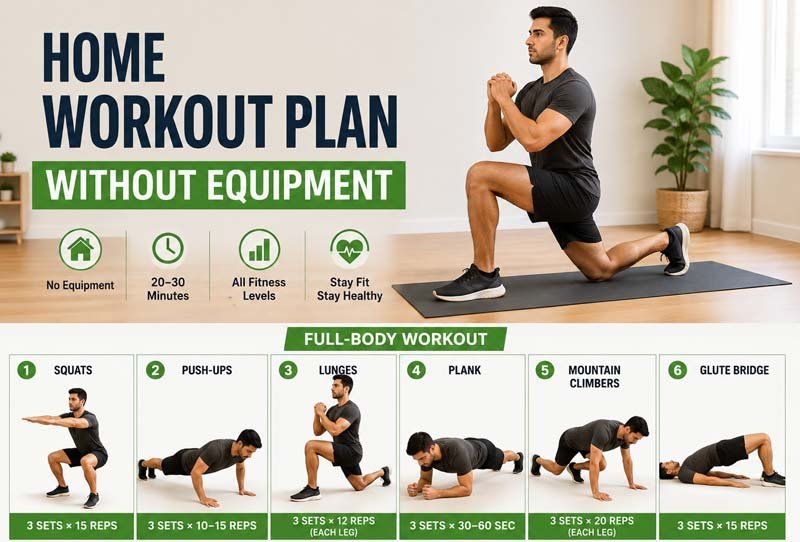
Complete No-Equipment Home Workout Plan for Full-Body Fitness
Cardiovascular health, muscular endurance, flexibility, balance, and general physical fitness can all be enhanced by bodyweight training. Regular physical activity is crucial for maintaining a healthy lifestyle and lowering the risk of chronic diseases, according to recommendations from organizations like the American Heart Association, the National Institutes of Health, and the Centers for Disease Control and Prevention (CDC).
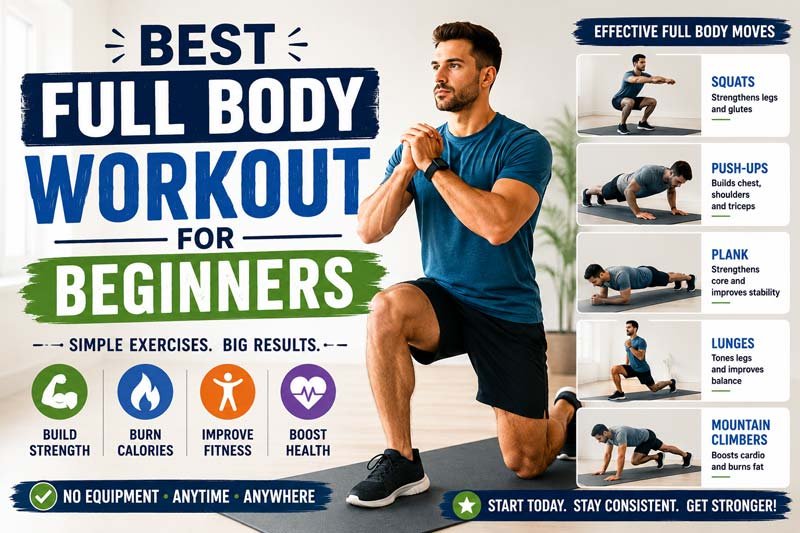
Also Visit – Best Full Body Workout for Beginners
This thorough guide will assist you in developing a sustainable and successful fitness plan without the need for any equipment, regardless of your level of experience.
What Is a Home Workout Plan Without Equipment?
An organized exercise plan that employs bodyweight exercises rather than gym equipment, dumbbells, or resistance bands is known as a home workout plan without equipment.
These exercises build muscle, increase endurance, and improve general fitness by utilizing natural movement patterns.
Examples Include
- Squats
- Push-ups
- Lunges
- Planks
- Mountain climbers
- Jumping jacks
- Glute bridges
- Burpees
Bodyweight exercises are perfect for both novice and experienced exercisers since they can be adjusted for varying levels of fitness.
Convenience is the main benefit. Without buying equipment, you can work out in your lawn, living room, bedroom, or even a little apartment.
Causes and Risk Factors for Poor Fitness
Due to contemporary lifestyle choices, a large number of Americans suffer from physical inactivity.
Sedentary Jobs
Millions of adults sit at workstations for the majority of their workdays.
Lack of Time
Attending the gym is often challenging due to hectic schedules.
Limited Access to Fitness Facilities
Some people cannot afford memberships or live far from fitness facilities.
Excessive Screen Time
Spending a lot of time on computers, smartphones, and television limits one’s ability to move.
Poor Dietary Habits
Consuming processed foods and fast food frequently might lead to weight gain and decreased energy.
Chronic Stress
Stress can make people less motivated and more likely to engage in sedentary behavior.
Also Visit – Best Sleep Habits for Better Health
Signs and Symptoms of Poor Physical Fitness
A number of obvious symptoms can result from inactivity.
Common Signs Include
- Low energy levels
- Weight gain
- Reduced muscle strength
- Poor endurance
- Shortness of breath during activity
- Difficulty climbing stairs
- Joint stiffness
- Poor posture
- Increased fatigue
- Reduced flexibility
Over time, many of these problems can be resolved with a regular exercise plan at home.
Benefits of Addressing Physical Inactivity
There are many health advantages to sticking to a home exercise plan.
Improved Cardiovascular Health
Frequent exercise promotes heart health and blood circulation.
Better Weight Management
Maintaining a healthy body weight and burning calories are two benefits of physical activity.
Increased Muscle Strength
Exercises using your own body weight test your muscles and increase your functional strength.
Enhanced Mental Health
Reduced stress, anxiety, and depressive symptoms are linked to exercise.
Better Mobility and Flexibility
Range of motion and healthy joints are supported by movement.
Increased Energy
Frequent exercise frequently increases daily energy levels and stamina.
Lower Risk of Chronic Disease
Exercise may lower the risk of heart disease, type 2 diabetes, and obesity.
Best Natural Solutions: Workout Routine at Home Without Equipment
A balanced weekly bodyweight exercise plan is one of the best strategies.
Warm-Up Routine (5–10 Minutes)
Always begin with a warm-up.
Examples Include
- Marching in place
- Arm circles
- Leg swings
- Shoulder rolls
- Light jogging in place
Warming up improves blood flow and gets muscles ready for exercise.
Beginner Home Workout Plan Without Equipment
Perform each exercise for 10–15 repetitions.
- Complete 2–3 rounds
- Rest for 60–90 seconds between rounds
1. Bodyweight Squats
Muscles Worked
- Quadriceps
- Hamstrings
- Glutes
- Core
Benefits
- Increases strength in the lower body
- Enhances mobility
2. Push-Ups
If needed, adjust with your knees.
Muscles Worked
- Chest
- Shoulders
- Triceps
Benefits
- Enhances upper body strength
3. Reverse Lunges
Muscles Worked
- Legs
- Glutes
- Core
Benefits
- Enhances coordination and balance
4. Glute Bridges
Muscles Worked
- Glutes
- Hamstrings
- Lower back
Benefits
- Enhances core stability and posture
5. Plank Hold
Hold for 20–45 seconds.
Muscles Worked
- Core
- Shoulders
- Back
Benefits
- Improves stability
6. Mountain Climbers
Perform for 20–30 seconds.
Benefits
- Increases cardiac rate
- Enhances stamina
7. Bird Dog Exercise
Benefits
- Enhances equilibrium
- Enhances the strength of the core muscles
8. Jumping Jacks
Perform for 30–60 seconds.
Benefits
- Cardiovascular exercise
- Whole-body motion
Weekly Home Workout Schedule
| Day | Activity |
|---|---|
| Monday | Full Body Workout |
| Tuesday | 30-minute brisk walk |
| Wednesday | Full Body Workout |
| Thursday | Stretching or yoga |
| Friday | Full Body Workout |
| Saturday | Outdoor activity or walking |
| Sunday | Recovery and mobility work |
The CDC recommends engaging in at least 150 minutes of moderate-intensity physical exercise each week, which is supported by this plan.
Also Visit – 50 Daily Health Tips for a Better Life
Intermediate Bodyweight Workout Progression
As fitness improves, increase difficulty by:
- Increasing the repetitions
- Performing extra rounds of exercise
- Cutting down on downtime
Examples Include
- Standard push-ups
- Jump squats
- Walking lunges
- Side planks
- Burpees
- Single-leg glute bridges
Strength and fitness gains are sustained with progressive overload.
Best Foods for Americans Supporting Home Workouts
When exercise is combined with a healthy diet, the effects improve.
Eggs
Give them critical nutrition and high-quality protein.
Oatmeal
Uses complex carbs to provide long-lasting energy.
Greek Yogurt
Includes probiotics and protein.
Chicken Breast
A source of lean protein that aids in muscle repair.
Salmon
Plenty of omega-3 fatty acids.
Sweet Potatoes
Give them fiber, vitamins, and minerals.
Berries
Include antioxidants that promote general well-being.
Brown Rice
Provide sustained energy.
Leafy Greens
Plenty of minerals and vitamins.
Nuts and Seeds
Include protein and good fats.
Best Lifestyle Changes for Long-Term Fitness
Increase Daily Movement
Avoid sitting for extended periods of time.
Prioritize Sleep
Try to get between seven and nine hours of good sleep every night.
Stay Hydrated
Water should be consumed regularly throughout the day.
Manage Stress
Engage in mindfulness, deep breathing, or meditation.
Create a Consistent Schedule
Exercises should be treated as essential appointments.
Set Realistic Goals
Prioritize consistent improvement over perfection.
Common Mistakes to Avoid
A lot of people inadvertently restrict their outcomes.
Skipping Warm-Ups
Muscles that are cold are more prone to damage.
Doing Too Much Too Soon
Increase the intensity of your workouts gradually.
Using Poor Form
Injuries can be avoided with proper technique.
Inconsistent Training
The secret to progress is regular exercise.
Ignoring Recovery
Muscle healing is aided by rest days.
Neglecting Nutrition
Poor eating habits cannot be made up for by exercise alone.
Comparing Yourself to Others
Pay attention to your personal fitness path.
Risks and Precautions
Exercising at home is usually safe, but care must be taken.
- If you have any health issues, speak with your doctor before beginning a new workout plan.
- Start at a level of fitness that is suitable.
- If you feel lightheaded, have chest pain, or have severe dyspnea, stop working out.
- Every exercise should be performed with correct form.
- Make sure there are no obstructions in the areas used for exercise.
Safety ought to come first at all times.
Also Visit – Best Morning Workout for Weight Loss
Expert Tips for Success
Start Small
Even 15 to 20 minutes of exercise can be useful.
Focus on Consistency
Frequent exercise is more beneficial than sporadic, high-intensity bouts.
Track Progress
Maintain a basic fitness journal.
Build Habits
If at all feasible, work out at the same time every day.
Stay Patient
Improvements in fitness take time.
Prioritize Recovery
Muscle healing is aided by sleep and rest.
Enjoy the Process
Select workouts that you enjoy and can stick with.
Frequently Asked Questions
Can I get muscle without using any equipment?
Indeed. Strength and muscle can be developed through bodyweight exercises, particularly for novices.
How frequently should I exercise at home?
Exercise three to five days a week is beneficial for most adults.
Do bodyweight exercises help people lose weight?
When paired with a nutritious diet, bodyweight workouts can help with weight management.
What is the ideal duration for an exercise at home?
The majority of sessions can be finished in twenty to forty-five minutes.
Is it safe for novices to work out at home?
Yes, novices should take their time and concentrate on good form.
After work out, what should I eat?
A protein and carbohydrate-rich supper can aid in recuperation.
Do I need specific shoes to work out at home?
Athletic shoes with support are frequently advised, especially for high-impact workouts.
How soon can I expect to receive results?
Within a few weeks of regular exercise, many people report increases in strength, endurance, and energy.
Is walking a sufficient form of exercise?
Walking can be incorporated into a well-rounded fitness plan and has great health advantages.
Conclusion
An easy and efficient way to increase strength, enhance fitness, and promote long-term health is through an at-home exercise plan without any equipment. Bodyweight exercises offer a useful alternative that can fit into practically any lifestyle, whether your aim is enhanced mobility, better cardiovascular health, higher vitality, or weight control.
You can develop long-lasting habits that promote lifelong fitness by being persistent, paying attention to technique, and combining exercise with a balanced diet and enough rest.