Walking and running are two of the most common kinds of exercise for weight loss. Both are easily accessible, reasonably priced, and efficient methods of increasing physical fitness and burning calories.
But a lot of people are curious:
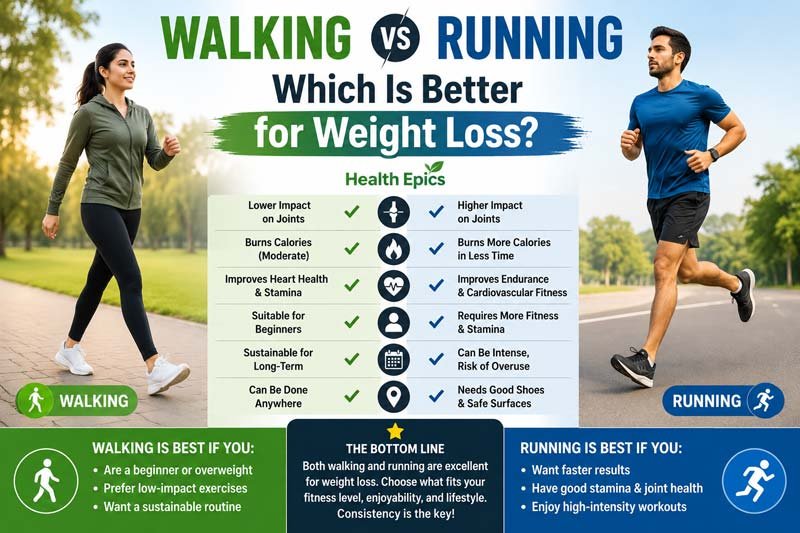
Walking vs Running: Which Is Better for Weight Loss?
Your current level of fitness, body weight, health, exercise preferences, and long-term consistency are some of the variables that determine the answer. Walking has many health benefits and may be easier for many people to maintain, but running burns more calories in less time.
Regular physical activity is essential for managing weight and maintaining general health, according to recommendations from the American Heart Association and the CDC. Staying active can assist create the calorie deficit required for weight loss, whether you want to run, stroll, or do both.
This guide compares the efficacy of walking versus running for fat loss, examines the research behind both, and assists you in deciding which strategy best suits your lifestyle.
What Is Walking vs Running for Weight Loss?
Cardiovascular exercises like walking and running boost energy expenditure and aid with weight control.
Walking
Walking is a low-impact exercise where one foot is always on the ground. It can be done practically anyplace and is appropriate for most fitness levels.
Running
Running is a higher-intensity exercise in which each stride involves both feet leaving the ground. Compared to walking, it uses more energy and typically burns more calories per minute.
When paired with a calorie deficit and good eating practices, both types of exercise can help reduce weight.
Causes and Risk Factors for Weight Gain
It’s crucial to comprehend the reasons behind weight gain before comparing walking and running.
Sedentary Jobs – Millions of Americans sit at workstations for eight to ten hours every day.
Fast Food Consumption – Frequent meals at restaurants are frequently high in sodium, harmful fats, and calories.
Processed Foods – Convenience meals and highly processed snacks can make it simple to overindulge in calories.
Stress – Emotional eating and cravings may be exacerbated by long-term stress.
Poor Sleep – Appetite regulation and hunger hormones can be impacted by sleep loss.
Aging – As we age, our metabolism naturally slows down, especially when we lose muscle mass.
Lack of Physical Activity – The total amount of calories expended is decreased by insufficient movement.
Signs and Symptoms of Excess Body Fat
Gaining weight can have an impact on one’s general health and quality of life.
Typical symptoms consist of:
- Decreased endurance
- Pain in the joints
- High blood pressure
- Having trouble going up stairs
- A higher chance of developing type 2 diabetes
- Poor quality of sleep
- Low amounts of energy
These symptoms can be alleviated by addressing excess weight with regular exercise and a nutritious diet.
Benefits of Addressing Excess Weight
There are significant health benefits to losing even 5% to 10% of body weight.
Improved Heart Health – Frequent exercise promotes normal cholesterol and blood pressure levels.
Better Blood Sugar Control – Insulin sensitivity can be enhanced by losing weight.
Increased Energy – Many report feeling less tired and having more endurance.
Reduced Joint Stress – Every pound loss helps ease hip and knee strain.
Better Mental Health – Stress and anxiety symptoms may be lessened by exercise.
Improved Longevity – Many chronic diseases can be prevented by maintaining a healthy weight.
Walking vs Running: Which Is Better for Weight Loss?
Calorie Burn Comparison
Running is frequently thought to be better for weight loss because it burns calories.
For an adult weighing 180 pounds:
Walking at 3.5 mph
About 280–350 calories are burned every hour.
Running at 6 mph
About 650–900 calories are burned every hour.
In general, running burns almost twice as many calories in the same length of time.
Winner: Running
Running offers a definite advantage if your objective is to burn as many calories as possible in the shortest amount of time.
Fat Loss Efficiency
When you regularly burn more calories than you take in, you lose weight.
Running can contribute to a greater calorie deficit because it burns more calories.
Walking, however, can still result in considerable fat loss if done regularly.
Winner: Slight Advantage to Running
Running may hasten the reduction of fat, but consistency is more important than intensity.
Sustainability and Adherence
Exercise that you can continue is the finest.
Many people:
- Take pleasure in walking more
- Feel less exhausted
- Recuperate more quickly
- Continue walking for a long time.
Adherence is one of the most significant symptoms of effective weight loss, according to research.
Winner: Walking
Walking is easier for many adults to maintain for years.
Joint Impact
Compared to running, walking puts less strain on joints.
This may be particularly crucial for:
- Senior citizens
- Beginners
- People who are obese
- People experiencing knee pain
Winner: Walking
For many communities, walking is a safer option.
Cardiovascular Benefits
Cardiovascular health is enhanced by both activities.
Advantages consist of:
- Reduced blood pressure
- Enhanced blood flow
- Lower cholesterol levels
- A lower risk of heart disease
Because running is more intense, it may increase cardiovascular fitness more quickly.
Winner: Running
Both, though, are very advantageous.
Accessibility
Walking necessitates:
- Shoes that are comfortable
- A secure path for walking
Running necessitates:
- Greater preparation for fitness
- Increased requirements for recuperation
- A greater awareness of injuries
Winner: Walking
Nearly everyone is able to begin walking right away.
Best Natural Solutions for Weight Loss
Exercise should be combined with good behaviors, whether you run or walk.
Create a Moderate Calorie Deficit – Maintaining a calorie deficit is the major factor in weight loss.
Prioritize Protein – Protein aids in fat loss while maintaining muscle.
Increase Daily Movement – Throughout the day, look for opportunities to move.
Stay Hydrated – Best morning drinks helps control hunger and performance.
Sleep 7–9 Hours – Restful sleep promotes recuperation and a healthy metabolism.
Manage Stress – Attempts to lose weight may be hampered by persistent stress.
Best Foods for Americans Trying to Lose Weight
Exercise by alone is rarely sufficient to lose a considerable amount of weight.
Pay attention to nutrient-dense foods like:
Lean Proteins
- Chicken breast
- Turkey
- Fish
- Eggs
- Greek yogurt
High-Fiber Foods
- Oatmeal
- Beans
- Lentils
- Vegetables
Fruits
- Apples
- Berries
- Oranges
Healthy Fats
- Avocados
- Nuts
- Olive oil
Whole Grains
- Brown rice
- Quinoa
- Whole-wheat bread
Limit:
- Sugary drinks
- Fast food
- Processed snacks
- Excess alcohol
Best Exercises and Lifestyle Changes
Running and walking are terrific, but the best results come from mixing several activities.
Strength Training
increases muscle mass and boosts metabolism.
Strive for:
Two to three sessions per week
Interval Walking
increases muscle mass and boosts metabolism.
Strive for:
Two to three sessions per week
Run-Walk Intervals
ideal for beginners.
- Running for one minute
- Walking for two minutes
- For 20 to 30 minutes, repeat.
Daily Activity Goals
Strive for:
- 7,000–10,000 steps every day
Meal Planning
One way to lessen reliance on convenience foods is to prepare meals in advance.
Common Mistakes to Avoid
Exercising Without Changing Diet – Without dietary modifications, losing weight is far more difficult.
Overestimating Calorie Burn – Exercise trackers could overstate the number of calories burnt.
Doing Too Much Too Soon – Injury risk may rise with abrupt increases in running volume.
Ignoring Recovery – Days of rest are crucial.
Comparing Yourself to Others – Age, genetics, and lifestyle all influence progress.
Risks and Precautions
Think about your present state of health before starting a new fitness plan.
Walking Risks
Low danger in general, but could include:
- Blisters
- Soreness in the muscles
- Minor injuries from overuse
Running Risks
Among the possible dangers are:
- Shin splints
- Pain in the knee
- Stress fractures
- Damage to the Achilles tendon
Before beginning strenuous activity, speak with a healthcare professional if you have:
- Heart conditions
- Diabetes
- joints Disorders
- Severe obesity
Expert Tips
- Begin where you are.
- Prioritize consistency over flawlessness.
- Gradually increase activities.
- Put on supportive shoes.
- Monitor development on a monthly basis instead of a daily basis.
- Combine physical activity with a balanced diet.
- Incorporate strength training.
- Give sleep and stress reduction first priority.
- Pick things you like to do.
- Keep in mind that sustainable practices yield long-lasting outcomes.
Frequently Asked Questions
Which is better for reducing tummy fat: running or walking?
When paired with a calorie deficit, both can aid in the reduction of belly fat. Walking may be easier to sustain regularly, but running burns more calories.
How much walking is ideal for weight loss?
Walking briskly for 30 to 60 minutes most days of the week is beneficial for many adults.
Is it possible for walking to burn as many calories as running?
While running burns more calories per minute, walking can burn a comparable number of calories over a longer period of time.
Does daily running aid with weight loss?
Not necessarily. Recuperation is crucial. Including rest days or lower-intensity activities is beneficial for the majority of people.
Can walking 10,000 steps a day help me lose weight?
Indeed. When paired with a nutritious diet, walking 10,000 steps a day can aid in weight loss.
Walking or running burns more tummy fat?
Both help reduce total body fat, although running typically burns more calories.
Is walking at a fast pace sufficient exercise?
Yes, brisk walking can help with weight control, fitness, and cardiovascular health.
What is the ideal walking pace for weight loss?
For many adults, a fast pace of about three to four miles per hour works well.
Should beginners run or walk?
Since walking has less impact and is easier to maintain, it is frequently the ideal option for beginners.
In comparison to walking, how many calories does running burn?
Depending on body weight and speed, running usually burns twice as many calories per minute as walking.
Key Takeaways
- Exercises that promote healthy weight loss include walking and running.
- In less time, running burns more calories.
- Walking is frequently more sustainable and less taxing on the joints.
- Exercise intensity alone is not as important as consistency.
- The best outcomes come from combining exercise with a balanced diet.
- Strength exercise can help maintain muscle mass and aid with fat loss.
- Your level of fitness, health, and personal preferences will determine which option is ideal for you.
Conclusion
There is no one-size-fits-all solution when comparing Walking vs. Running: Which Is Better for Weight Loss. While walking offers a lower-impact, more sustainable choice that can be maintained by people of almost any fitness level, running typically burns more calories and may hasten weight reduction. For a lot of Americans, picking an activity they can do regularly and like is the best course of action. Regular exercise combined with a good diet can help you lose weight sustainably and enhance your general health, regardless of whether you enjoy jogging, walking, or a mix of the two.