If you’ve been trying to lose weight but aren’t seeing the results you expected, you may be making one or more common mistakes without realizing it. Understanding the top 10 weight loss mistakes to avoid can help you build healthier habits, stay motivated, and achieve long-term success.
Top 10 Weight Loss Mistakes to Avoid for Faster Results
In the United States, nearly three out of four adults are overweight or living with obesity, according to the Centers for Disease Control and Prevention (CDC). Busy work schedules, sedentary lifestyles, oversized restaurant portions, highly processed foods, chronic stress, and inconsistent exercise routines all make weight management more challenging.
Many people believe they need a strict diet or an intense workout program to lose weight. However, sustainable weight loss comes from small, consistent lifestyle changes rather than quick fixes. Avoiding common mistakes can improve your results while reducing frustration and helping you maintain your progress over time.
This comprehensive guide explains the biggest weight loss mistakes, why they happen, and what you can do instead using evidence-based strategies supported by organizations such as the CDC, the National Institutes of Health (NIH), and the American Heart Association (AHA).
What Are Weight Loss Mistakes?
Weight loss mistakes are habits or behaviors that interfere with your body’s ability to lose excess fat or maintain a healthy weight. These mistakes may involve nutrition, physical activity, sleep, stress management, or unrealistic expectations.
Many people unknowingly adopt habits that slow progress, including skipping meals, eating too little protein, relying on fad diets, or exercising without paying attention to nutrition.
Successful weight loss is about creating a sustainable calorie deficit while meeting your body’s nutritional needs. Instead of looking for shortcuts, focus on building habits that support long-term health.
Causes and Risk Factors That Make Weight Loss Difficult
Weight loss is influenced by many factors beyond willpower alone. Understanding these challenges can help you identify obstacles and develop realistic solutions.
Sedentary Lifestyle
Many Americans spend long hours sitting at desks, driving, or using electronic devices. Limited physical activity reduces the number of calories burned each day.
Highly Processed Foods
Ultra-processed foods are often high in calories, unhealthy fats, refined carbohydrates, and added sugars. These foods can make it easier to overeat without feeling satisfied.
Emotional Eating
Stress, anxiety, loneliness, and boredom often trigger eating in the absence of physical hunger. Emotional eating may contribute to excess calorie intake over time.
Poor Sleep
Adults who regularly sleep fewer than seven hours per night may experience hormonal changes that increase hunger and cravings.
Unrealistic Expectations
Many people expect dramatic results within a few weeks. When progress slows, they may become discouraged and abandon healthy habits.
Medical Conditions
Certain health conditions, medications, hormonal changes, and aging can affect metabolism and make weight loss more challenging. Consulting a healthcare provider can help identify underlying factors.
Signs You’re Making Weight Loss Mistakes
You may be making one or more common weight loss mistakes if you notice the following:
- Your weight has remained the same for several weeks despite your efforts.
- You frequently feel hungry or deprived.
- You experience low energy during the day.
- You often crave sugary or high-fat foods.
- You skip meals and overeat later.
- You rely heavily on diet products or supplements.
- You feel frustrated or discouraged with your progress.
- You lose weight quickly but regain it just as fast.
Recognizing these signs early can help you adjust your approach before losing motivation.
Benefits of Avoiding Common Weight Loss Mistakes
Correcting ineffective habits offers benefits that go beyond the number on the scale.
More Sustainable Weight Loss – Healthy habits are easier to maintain than restrictive diets, making long-term success more likely.
Better Nutrition – A balanced eating pattern provides essential vitamins, minerals, protein, healthy fats, and fiber that support overall health.
Improved Energy Levels – Eating nutritious foods and staying active can improve daily energy and productivity.
Better Heart Health – According to the American Heart Association, maintaining a healthy weight may reduce the risk of heart disease, high blood pressure, and high cholesterol.
Improved Blood Sugar Control – Healthy eating and regular physical activity can help support stable blood sugar levels and reduce the risk of type 2 diabetes.
Greater Confidence – As healthy habits become part of your routine, many people experience improved self-esteem and confidence.
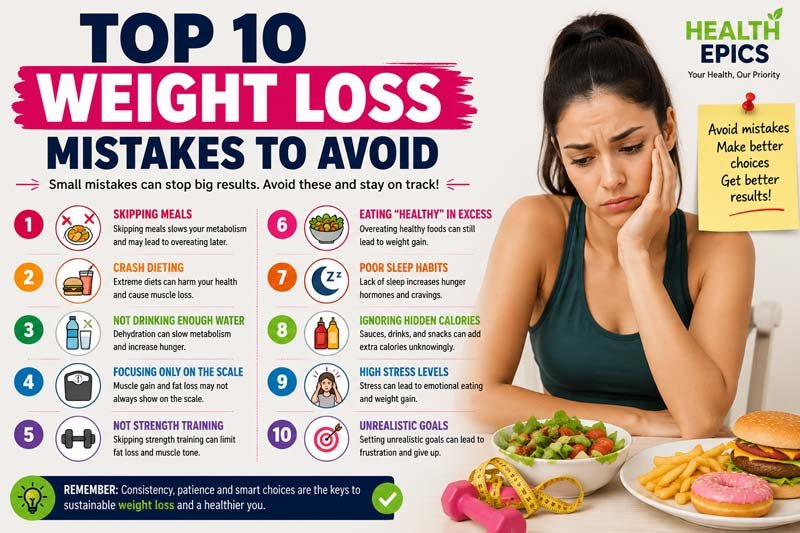
Top 10 Weight Loss Mistakes to Avoid
1. Following Crash Diets
One of the biggest weight loss mistakes is relying on crash diets that promise rapid results.
These diets often involve severe calorie restriction or eliminating entire food groups. While they may lead to short-term weight loss, they are difficult to maintain and may increase the risk of regaining lost weight.
Why It Happens
People often want immediate results and are drawn to diets that promise quick transformations.
Why It’s a Problem
Crash diets may:
- Slow metabolism
- Increase fatigue
- Cause nutrient deficiencies
- Reduce muscle mass
- Trigger overeating after the diet ends
What to Do Instead
Choose a balanced eating plan that includes:
- Lean protein
- Whole grains
- Fruits
- Vegetables
- Healthy fats
- Appropriate portion sizes
Aim for gradual, sustainable weight loss rather than rapid changes.
2. Skipping Meals
Many people believe skipping breakfast or lunch will reduce calorie intake. In reality, this strategy often backfires.
Why It Happens
Busy schedules, intermittent fasting without proper planning, or attempts to “save calories” can lead to skipped meals.
Why It’s a Problem
Skipping meals may:
- Increase hunger later in the day
- Lead to overeating
- Reduce energy levels
- Make healthy food choices more difficult
What to Do Instead
Eat balanced meals at regular intervals that include:
- Protein
- Fiber
- Healthy fats
These nutrients help promote fullness and steady energy.
3. Not Eating Enough Protein
Protein is one of the most important nutrients for healthy weight management.
Why It Happens
Many people consume meals high in refined carbohydrates but low in protein.
Why It’s a Problem
Inadequate protein intake may:
- Increase hunger
- Reduce muscle preservation during weight loss
- Make it harder to stay satisfied between meals
Better Choices
Include protein-rich foods such as:
- Chicken breast
- Turkey
- Fish
- Eggs
- Greek yogurt
- Cottage cheese
- Beans
- Lentils
- Tofu
Try to include a source of protein with every meal and snack.
4. Drinking Your Calories
Calories from beverages can add up quickly without providing lasting fullness.
Common examples include:
- Soda
- Sweetened coffee drinks
- Energy drinks
- Sweet tea
- Fruit-flavored beverages
- Alcoholic drinks
Why It’s a Problem
Liquid calories are easy to consume in large amounts and often contain significant added sugar.
Better Choices
Choose beverages such as:
- Water
- Sparkling water
- Unsweetened tea
- Black coffee (if tolerated)
- Low-fat milk
Replacing sugary drinks with water can significantly reduce daily calorie intake.
5. Ignoring Portion Sizes
Even nutritious foods can contribute to weight gain when consumed in excessive amounts.
Restaurant meals in the United States are often much larger than recommended serving sizes.
Common Portion Mistakes
- Eating directly from large packages
- Taking multiple servings without measuring
- Oversized restaurant meals
- Frequent snacking while distracted
Better Portion Control Strategies
- Use smaller plates and bowls.
- Read Nutrition Facts labels.
- Measure portions occasionally to improve awareness.
- Fill half your plate with vegetables.
- Eat slowly and stop when comfortably satisfied rather than overly full.
Learning proper portion control can make a significant difference in long-term weight management without eliminating your favorite foods.
6. Relying Only on Exercise While Ignoring Nutrition
Exercise is an essential part of a healthy lifestyle, but it cannot completely offset poor eating habits. Many people overestimate the number of calories they burn during a workout and reward themselves with high-calorie meals afterward.
Why It’s a Problem
Weight loss is influenced largely by nutrition. Even an hour of exercise may burn fewer calories than a single fast-food meal contains.
What to Do Instead
Follow the “80/20” approach:
- Prioritize healthy eating.
- Exercise consistently.
- Combine cardiovascular workouts with strength training.
- Focus on creating sustainable habits instead of trying to “burn off” unhealthy meals.
7. Not Getting Enough Sleep
Sleep plays a vital role in weight management. Adults who consistently get too little sleep often experience increased hunger and reduced energy, making it harder to make healthy choices.
Why It’s a Problem
Insufficient sleep may:
- Increase cravings for sugary and high-fat foods
- Affect hormones that regulate hunger and fullness
- Reduce motivation to exercise
- Increase stress levels
What to Do Instead
Aim for 7–9 hours of quality sleep each night.
Healthy sleep habits include:
- Going to bed at the same time every night
- Limiting screen time before bed
- Keeping the bedroom cool, dark, and quiet
- Avoiding large meals and excessive caffeine late in the evening
8. Setting Unrealistic Expectations
Many people expect dramatic weight loss within a few weeks. When progress slows, they become discouraged and quit.
Why It’s a Problem
Healthy weight loss is gradual. Losing weight too quickly often increases the risk of regaining it.
What to Do Instead
Focus on long-term progress instead of perfection.
Celebrate improvements such as:
- Increased energy
- Better sleep
- Improved fitness
- Healthier eating habits
- Smaller waist measurements
- Better blood pressure or blood sugar levels
Remember that consistency is more important than speed.
9. Ignoring Strength Training
Many beginners rely only on cardio exercise.
While walking, cycling, full body workout and swimming are excellent for heart health, strength training helps preserve and build muscle during weight loss.
Benefits of Strength Training
- Supports metabolism
- Preserves lean muscle
- Improves balance and posture
- Enhances bone health
- Makes everyday activities easier
Beginner-Friendly Exercises
- Squats
- Lunges
- Push-ups
- Resistance band exercises
- Dumbbell rows
- Bodyweight exercises
The CDC recommends performing muscle-strengthening activities at least two days per week.
10. Depending on Weight-Loss Supplements
The supplement industry offers countless products claiming to melt fat quickly. However, many lack strong scientific evidence, and some may cause unwanted side effects.
Why It’s a Problem
Weight-loss supplements:
- May not produce meaningful results
- Can interact with medications
- May contain stimulants
- Are not substitutes for healthy eating and exercise
What to Do Instead
Speak with a healthcare provider before taking any supplement.
Focus on proven lifestyle habits instead of quick fixes.
Frequently Asked Questions
What are the biggest weight loss mistakes?
Common mistakes include skipping meals, following crash diets, eating too little protein, ignoring portion sizes, relying on supplements, and expecting rapid results.
Why am I exercising but not losing weight?
You may be consuming more calories than you realize, underestimating portion sizes, or overlooking the importance of nutrition and strength training.
Is skipping meals good for weight loss?
No. Skipping meals often leads to increased hunger and overeating later in the day.
How much protein should I eat to lose weight?
Protein needs vary by age, activity level, and body size, but including protein with every meal can help improve satiety and preserve muscle during weight loss.
Are weight-loss supplements effective?
Most supplements provide limited benefits and should never replace healthy eating and regular exercise.
Can poor sleep prevent weight loss?
Yes. Inadequate sleep can affect appetite hormones, increase cravings, and reduce motivation for physical activity.
What is the healthiest rate of weight loss?
For many adults, losing about 1–2 pounds per week is considered a safe and sustainable goal.
Does strength training help with weight loss?
Yes. Strength training helps preserve muscle, supports metabolism, and complements a healthy eating plan.
How can I avoid emotional eating?
Practice stress-management techniques, eat regular balanced meals, identify emotional triggers, and seek professional support if emotional eating becomes difficult to manage.
What is the most important habit for successful weight loss?
Consistency. Small, healthy habits practiced every day are far more effective than short-term extreme diets.
Conclusion
Learning the top 10 weight loss mistakes to avoid can save you time, reduce frustration, and improve your chances of long-term success. Sustainable weight loss isn’t about perfection or following the latest diet trend—it’s about building healthy habits that fit your lifestyle. By eating nutrient-dense foods, staying physically active, managing stress, getting enough sleep, and setting realistic expectations, you can achieve meaningful progress while improving your overall health. Remember that lasting weight loss is a journey, and every healthy choice you make brings you one step closer to your goals.