
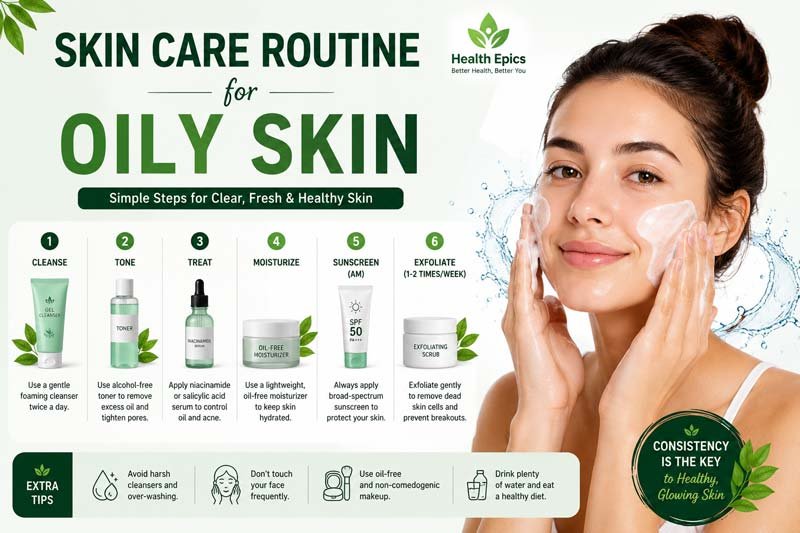
A consistent skin care routine for oily skin is one of the most effective ways to manage excess oil, reduce acne breakouts, minimize enlarged pores, and maintain a healthy complexion. While oily skin can help slow the appearance of fine lines by keeping the skin naturally moisturized, excessive sebum production often leads to clogged pores, blackheads, whiteheads, and persistent shine.
Skin Care Routine for Oily Skin
Many adults in the United States struggle with oily skin due to genetics, hormonal changes, stress, environmental factors, and lifestyle habits. Long work hours, processed food consumption, lack of sleep, and frequent exposure to pollution can all affect skin health. The good news is that you don’t need an expensive 10-step routine to control oily skin. A simple, evidence-based skincare routine using gentle, non-comedogenic products can help restore balance without stripping the skin of its natural protective barrier.
According to the American Academy of Dermatology, proper cleansing, moisturizing, and daily sunscreen use are essential components of healthy skincare for all skin types, including oily skin. Choosing products designed specifically for oily or acne-prone skin can help reduce excess oil while maintaining healthy skin function.
This comprehensive guide by Health Epics explains the causes of oily skin, the benefits of a consistent routine, recommended skincare ingredients, and practical tips to help you achieve healthier-looking skin.
What Is Oily Skin?
Oily skin is a skin type characterized by excess production of sebum, an oily substance produced by sebaceous glands. Sebum plays an important role in protecting and moisturizing the skin. However, when the glands produce too much oil, pores can become clogged with dead skin cells and bacteria, increasing the likelihood of acne and other blemishes.
Also visit – Strength Training Benefits for Beginners: A Complete Guide
People with oily skin commonly experience:
- A shiny appearance, especially on the forehead, nose, and chin (the T-zone)
- Enlarged pores
- Frequent blackheads and whiteheads
- Acne breakouts
- Makeup that slides off quickly
- Skin that feels greasy within a few hours of cleansing
It’s important to remember that oily skin is not “dirty.” Excess oil is a natural biological process, and aggressive cleansing can actually make the problem worse.
Causes and Risk Factors for Oily Skin
Several factors can contribute to excess oil production.
1. Genetics
Genetics is one of the strongest predictors of skin type. If one or both of your parents have oily skin, you are more likely to experience it as well.
Also visit – Healthy Morning Routines to Start Your Day Right
2. Hormonal Changes
Hormones influence sebaceous gland activity.
Periods of hormonal fluctuation include:
- Puberty
- Menstrual cycles
- Pregnancy
- Perimenopause
- Certain medical conditions
Increased androgen hormones can stimulate greater sebum production.
3. Stress
Chronic stress triggers the release of cortisol and other hormones that may increase oil production.
Busy work schedules, financial concerns, and inadequate relaxation can indirectly affect skin health.
4. Hot and Humid Weather
High humidity and warm temperatures often increase oil production and sweating, making the skin appear shinier.
5. Overwashing
Many people mistakenly believe frequent washing removes oily skin.
In reality, excessive cleansing may strip the skin’s natural oils, causing sebaceous glands to produce even more oil to compensate.
Also visit – Best Full Body Workout for Beginners
6. Using Harsh Products
Products containing high concentrations of alcohol or harsh cleansers can damage the skin barrier.
When the barrier becomes compromised, the skin may respond by producing additional oil.
7. Poor Lifestyle Habits
Certain lifestyle factors may indirectly affect skin health, including:
- Inadequate sleep
- Chronic stress
- Smoking
- High consumption of ultra-processed foods
- Limited physical activity
While diet alone does not cause oily skin, overall lifestyle habits influence skin health.
Signs and Symptoms of Oily Skin
Recognizing oily skin helps you choose products that meet your skin’s needs.
Common signs include:
Persistent Shine – The skin becomes shiny within a few hours after washing.
Enlarged Pores – Pores appear larger, especially around the nose and cheeks.
Frequent Acne – Excess oil combines with dead skin cells, increasing the likelihood of clogged pores.
Common blemishes include:
- Blackheads
- Whiteheads
- Pimples
- Papules
- Pustules
Makeup Doesn’t Last – Foundation and concealer may separate or slide off more quickly due to excess oil.
Greasy Feeling – The skin may feel oily throughout the day, even after cleansing.
Also visit – What Is Ayurveda? Complete Beginner’s Guide
Benefits of Following a Proper Skin Care Routine for Oily Skin
A consistent skin care routine for oily skin offers benefits beyond reducing shine.
Helps Control Excess Oil – Using gentle cleansers and lightweight moisturizers helps regulate oil production without overdrying the skin.
Reduces Acne Breakouts – Keeping pores clean reduces the buildup of oil, bacteria, and dead skin cells.
Improves Skin Texture – Regular exfoliation and hydration help create smoother-looking skin.
Minimizes the Appearance of Pores – While pore size cannot permanently change, clean pores often appear smaller.
Supports a Healthy Skin Barrier – Healthy skin retains moisture more effectively and becomes less prone to irritation.
Improves Makeup Application – Balanced skin provides a smoother surface for makeup, helping products last longer.
Also visit – How to Improve Your Immune System Naturally
Morning Skin Care Routine for Oily Skin
A simple morning routine helps remove overnight oil buildup while protecting the skin throughout the day.
Step 1: Cleanse with a Gentle Foaming Cleanser
Choose a cleanser designed for oily or acne-prone skin.
Look for products labeled:
- Oil-free
- Non-comedogenic
- Fragrance-free (if sensitive)
Avoid scrubbing aggressively, as this can irritate the skin.
Wash using lukewarm water instead of hot water.
Step 2: Apply a Lightweight Toner (Optional)
Modern toners are designed to hydrate and refresh the skin rather than strip away natural oils.
Look for ingredients such as:
- Niacinamide
- Glycerin
- Panthenol
Avoid alcohol-heavy formulations that may cause dryness.
Step 3: Use a Targeted Serum
Serums deliver concentrated active ingredients.
Helpful ingredients for oily skin include:
Niacinamide – May help reduce the appearance of enlarged pores and improve the skin barrier.
Hyaluronic Acid – Provides hydration without adding oil.
Salicylic Acid – A beta-hydroxy acid (BHA) that penetrates pores to remove excess oil and debris.
Choose only one active ingredient initially to minimize irritation.
Step 4: Apply an Oil-Free Moisturizer
One of the biggest misconceptions is that oily skin doesn’t need moisturizer.
Skipping moisturizer may actually encourage more oil production.
Choose moisturizers that are:
- Lightweight
- Gel-based
- Oil-free
- Non-comedogenic
Hydrated skin functions more effectively than dehydrated skin.
Step 5: Wear Sunscreen Every Day
Daily sunscreen is essential regardless of weather.
The American Academy of Dermatology recommends using a broad-spectrum sunscreen with SPF 30 or higher.
Also visit – Best Morning Workout for Weight Loss
Choose formulas labeled:
- Oil-free
- Matte finish
- Non-comedogenic
Apply sunscreen every morning, even on cloudy days.
Evening Skin Care Routine for Oily Skin
Nighttime is an opportunity to thoroughly remove dirt, sunscreen, makeup, and excess oil accumulated throughout the day.
Step 1: Remove Makeup
If you wear makeup, begin with:
- Micellar water
- Cleansing balm
- Gentle oil cleanser formulated for acne-prone skin
Double cleansing may be helpful for heavy makeup or sunscreen.
Step 2: Cleanse Again
Wash with your gentle facial cleanser to remove remaining impurities.
Avoid cleansing more than twice daily unless recommended by a dermatologist.
Step 3: Apply Treatment Products
Depending on your skin concerns, your dermatologist may recommend products containing:
- Salicylic acid
- Benzoyl peroxide
- Retinoids
- Azelaic acid
Introduce new products gradually to reduce irritation.
Step 4: Moisturize
Evening moisturizers should replenish hydration without clogging pores.
Gel-based moisturizers remain an excellent choice before bedtime.
Also visit – A Complete Guide to Essential Nutrients Your Body Needs
Recommended Ingredients for Oily Skin
Choosing the right ingredients is more important than purchasing expensive products.
Salicylic Acid – One of the most widely recommended ingredients for oily and acne-prone skin.
Benefits include:
- Unclogs pores
- Removes excess oil
- Reduces blackheads
- Helps prevent acne
Niacinamide – Niacinamide supports the skin barrier while helping improve the appearance of enlarged pores and uneven skin tone.
It is generally well tolerated by most skin types.
Hyaluronic Acid – Despite its name, hyaluronic acid is a hydrating ingredient—not an exfoliating acid.
It attracts water to the skin without increasing oiliness.
Ceramides – Ceramides help strengthen the skin barrier and reduce moisture loss.
Healthy skin barriers often become less irritated and more balanced.
Clay (Kaolin or Bentonite) – Clay masks may temporarily absorb excess surface oil.
Limit use to once or twice weekly to avoid excessive dryness.
Retinoids – Retinoids support healthy skin cell turnover and may improve acne and uneven skin texture.
Because they can increase sun sensitivity, they are generally applied at night and should be used according to product directions or a healthcare professional’s guidance.
Ingredients to Use Carefully – Some ingredients can irritate oily skin if overused, including:
- High concentrations of alcohol
- Physical scrubs with large abrasive particles
- Strong fragrances
- Overuse of exfoliating acids
Gentle, consistent skincare is typically more effective than aggressive treatments.
Best Lifestyle Habits for Healthy Skin
While topical skin care products are important, your daily habits also influence your skin’s appearance and overall health. A consistent skin care routine for oily skin works best when paired with healthy lifestyle choices.
Eat a Balanced Diet
No single food can cure oily skin or acne, but eating a balanced diet supports overall skin health.
Focus on nutrient-rich foods such as:
- Colorful vegetables
- Fresh fruits
- Whole grains
- Lean protein
- Beans and legumes
- Nuts and seeds
- Fatty fish rich in omega-3 fatty acids
Limiting ultra-processed foods and sugar-sweetened beverages may also support overall health.
Stay Hydrated
Drinking enough water helps maintain normal body functions, including skin health.
Although drinking extra water will not directly reduce oily skin, proper hydration supports the skin’s natural barrier and overall wellness.
Carry a reusable water bottle throughout the day to make hydration easier.
Exercise Regularly
Regular physical activity improves circulation and supports overall health.
The Centers for Disease Control and Prevention recommends that adults get at least 150 minutes of moderate-intensity aerobic activity each week, along with muscle-strengthening activities on two or more days.
After exercising:
- Wash your face if you’ve been sweating heavily.
- Avoid leaving sweat on the skin for long periods.
- Use clean towels to reduce bacteria transfer.
Get Enough Sleep
Adults generally need 7 to 9 hours of quality sleep each night.
Poor sleep may increase stress hormones that can influence skin health.
Develop a consistent bedtime routine by:
- Going to bed at the same time each night
- Reducing screen time before bed
- Keeping your bedroom cool and dark
Manage Stress
Stress affects many body systems, including the skin.
Healthy stress-management techniques include:
- Yoga
- Meditation
- Deep breathing
- Walking outdoors
- Journaling
- Spending time with family and friends
Managing stress can contribute to healthier skin over time.
Clean Your Pillowcases and Phone
Bacteria, oil, and dirt can accumulate on frequently touched surfaces.
Good hygiene habits include:
- Changing pillowcases every few days
- Cleaning makeup brushes weekly
- Wiping your phone screen regularly
- Avoiding touching your face throughout the day
These simple habits may help reduce pore-clogging debris.
Frequently Asked Questions (FAQ)
What is the best skin care routine for oily skin?
A basic routine includes a gentle cleanser, lightweight moisturizer, broad-spectrum SPF 30 or higher sunscreen in the morning, and targeted treatment products such as salicylic acid or retinoids when appropriate.
Should people with oily skin use moisturizer?
Yes. Oil-free, non-comedogenic moisturizers help maintain the skin barrier without making the skin excessively greasy.
How many times should I wash oily skin?
For most people, washing twice daily—morning and evening—is sufficient. Overwashing may increase irritation.
Which ingredients are best for oily skin?
Commonly recommended ingredients include:
- Salicylic acid
- Niacinamide
- Hyaluronic acid
- Ceramides
- Retinoids (used appropriately)
- Benzoyl peroxide (for acne-prone skin)
Does drinking more water reduce oily skin?
Drinking water supports overall health and hydration, but it does not directly reduce sebum production.
Can oily skin cause acne?
Yes. Excess oil can combine with dead skin cells and bacteria, contributing to clogged pores and acne breakouts.
Is sunscreen necessary for oily skin?
Absolutely. Daily sunscreen helps protect against UV damage, premature skin aging, and skin cancer. Choose oil-free, non-comedogenic formulas.
What foods are good for oily skin?
A balanced diet rich in vegetables, fruits, whole grains, lean proteins, healthy fats, and omega-3-rich fish supports overall skin health.
Can stress make oily skin worse?
Stress may influence hormone levels, which can contribute to increased oil production and acne flare-ups in some individuals.
When should I see a dermatologist for oily skin?
See a dermatologist if you have severe acne, painful cysts, scarring, or acne that doesn’t improve with consistent over-the-counter treatment.
Conclusion
Following a consistent skin care routine for oily skin is one of the most effective ways to manage excess oil, reduce clogged pores, and maintain healthier-looking skin. The foundation of an effective routine includes gentle cleansing, lightweight moisturizing, daily sunscreen, and targeted ingredients such as salicylic acid or niacinamide when appropriate. Healthy lifestyle habits—including balanced nutrition, regular exercise, stress management, quality sleep, and good hygiene—can further support overall skin health. Remember that skincare results take time. Rather than expecting overnight changes, focus on using products consistently and choosing formulations that suit your skin type. If persistent acne, irritation, or scarring continues despite a regular routine, consult a board-certified dermatologist for personalized evaluation and treatment. With patience and evidence-based care, you can build a routine that helps your skin look and feel its best.