Many people trying to lose weight question whether the sugar in fruit is too much to be part of a balanced diet. Fortunately, the response is reassuring. Best fruits for weight loss are high in fiber, water, vitamins, minerals, and antioxidants, which keep you full and boost your overall health.
Unlike foods with added sugars, whole fruits include natural sweetness and nutrients that may lower desire and make it easier to maintain a calorie-restricted diet.
Busy schedules, eating out often, processed foods, and modern lives make controlling weight for people in the US difficult. Eating nutrient-dense foods, such as whole fruits, is a great approach to increase the quality of your diet without feeling deprived.
Best Fruits for Weight Loss: A Complete Guide to Healthy Eating
The American Heart Association (AHA) and the Centers for Disease Control and Prevention (CDC) are two health organizations that encourage consuming a range of fruits and vegetables as part of a balanced eating pattern to promote general health and minimize the risk of chronic diseases. There isn’t one fruit that will “burn fat,” but substituting high-calorie snacks for fresh fruit can help build good eating habits that support long-term weight loss.
In this guide by Health Epics , you will find out what fruits are ideal for weight loss, why they work, and how to integrate them into a balanced diet.
What Are the Best Fruits for Weight Loss?
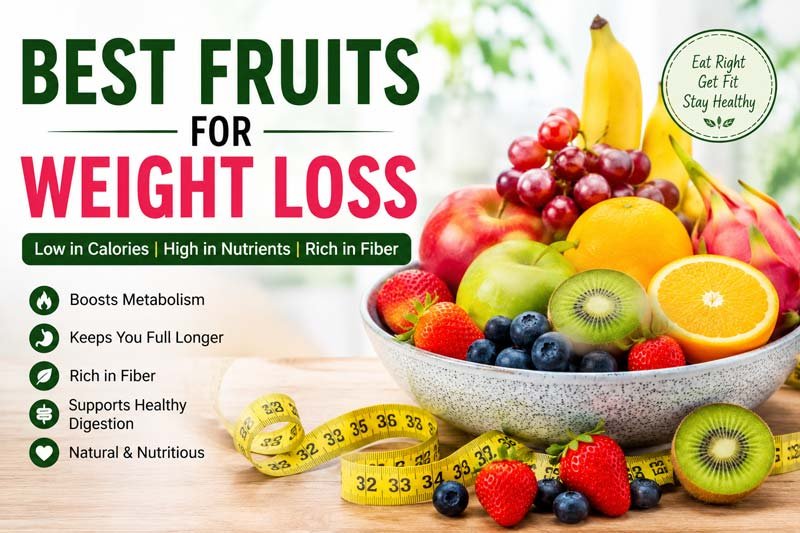
Some of the greatest fruits to eat when trying to lose weight include apples, berries, grapefruit, pears, oranges, kiwis, watermelon, and avocados. These fruits are often abundant in fiber, water, or healthful fat that promote satiety, which may help reduce total calorie intake. Encourage healthy weight control by eating entire fruits instead of processed snacks or sugary desserts.
Why Fruits Can Help You Lose Weight
Many people avoid fruit because they are afraid of natural sugar. But the sugar in raw fruit is quite different from the added sugars found in sodas, sweets, pastries, and many processed meals.
Whole fruits also include dietary fiber, which slows digestion and helps to buffer against sudden peaks in blood sugar. They also have a high-water content and so naturally contain fewer calories and provide bulk to meals and snacks. The combo makes you feel full on fewer calories.
Fruits are also packed with vitamins, minerals, and plant chemicals that aid in general wellness. Fruit alone will not help you shed weight, but you can keep a calorie deficit over time by substituting fresh fruit for high-calorie, low-nutrition foods.
Another benefit is convenience. Most fruits are a simple choice for families, busy professionals and students looking to make healthier choices throughout the day, as they require little to no preparation.
What Is a Good Fruit for Weight Loss?
All fruits do not have the same nutritional profile, yet many fruits can be very useful in trying to lose weight for several reasons.
| Characteristic | Why It Supports Weight Loss |
| High Fiber | Helps you stay full longer and supports healthy digestion. |
| High Water Content | Adds volume to meals while keeping calories relatively low. |
| Rich in Nutrients | Provides vitamins and minerals without excessive calories. |
| Naturally Sweet | Can satisfy cravings for sugary desserts. |
| Easy to Include in Meals | Encourages healthier snacking and meal planning. |
Rather than just counting calories, it’s useful to think about the nutritional worth of a food and its likeable aspects. It could be better to eat a fruit that fills you up for several hours than to eat a low-calorie meal that makes you hungry soon.
How Fruits Fit Into a Healthy Weight Loss Plan
Whole fruits fit into nearly all healthy eating patterns. They are a natural source of key nutrients and can be used as a substitution for less healthy snack options.
For instance, swap a sugary dessert for fresh berries and plain Greek yogurt, or potato chips for an apple and a small handful of almonds. You’ll be consuming more fiber and protein and less added sugar.
You can also pair fruit with a protein or healthy fat to help curb hunger between meals.
Best Fruits for Weight Loss
| Fruit | Key Nutrition Highlights | Weight Loss & Health Benefits |
| Apple | High in fiber, naturally sweet, low energy density, rich in vitamin C | Helps control appetite, satisfies sugar cravings, provides fewer calories per serving, and supports immune function. |
| Strawberries | High in vitamin C and water | Promote fullness, support hydration, and provide antioxidants with relatively few calories. |
| Blueberries | Rich in antioxidants and fiber | Support overall health, improve satiety, and make a nutrient-dense snack. |
| Raspberries | One of the highest-fiber fruits | Help keep you full longer, support digestive health, and aid appetite control. |
| Blackberries | Rich in vitamins, minerals, and fiber | Provide essential nutrients while supporting healthy digestion and fullness. |
| Grapefruit | High water content, low in calories, rich in vitamin C | Helps increase fullness, fits well into calorie-controlled diets, and supports immune health. |
| Pear | High in fiber, naturally sweet, rich in vitamin C | Promotes fullness, supports digestive health, helps reduce dessert cravings, and is convenient for on-the-go snacking. |
| Orange | Rich in vitamin C, high water content, contains fiber | Supports immune function, promotes fullness, helps manage hunger, and offers a healthy alternative to sugary snacks. |
| Watermelon | High water content, low calorie density, rich in vitamins A and C | Supports hydration, allows larger portions with fewer calories, and can replace high-calorie desserts. |
| Avocado | Healthy monounsaturated fats, dietary fiber, potassium, folate, and vitamin K | Promotes satiety, supports heart health and digestion, and contributes to overall wellness. |
| Banana | Rich in potassium, naturally sweet, portable source of carbohydrates | Provides natural energy for workouts, supports muscle function, satisfies sugar cravings, and is easy to carry as a healthy snack. |
Below are some of the best choices for people wanting to keep their weight under control.
1. Apples
Apples are often regarded as one of the finest fruits for weight loss as they contain a lot of fiber, are naturally low in calories, and are available all year round. A regular apple has a decent amount of dietary fiber. Most of this fiber is pectin, a soluble fiber that boosts satiety and delays the digestive process.
Since apples are consumed, your body has more time to recognize fullness, which can encourage slower eating.
In fact, numerous studies have shown that having an apple as a snack in the afternoon can help curb cravings for processed foods like cookies and candies later in the day.
If you have a choice, choose whole apples, not apple juice. It’s more satisfying to eat the whole fruit, because the fiber that may be lost in the juicing process is retained.
Apples can be eaten alone or cut up into salads, cereal, yogurt or whole grain peanut butter toast for a well-rounded snack.
2. Berries
Strawberries, blueberries, raspberries and blackberries are some of the most nutrient-dense fruits. They are incredibly low in calories and are packed with fiber, vitamin C and antioxidants.
Berries are inherently sweet, so you may use berries as a substitute for sweets without adding a lot of calories or extra sugar. The fiber level is particularly high, so they aid with feeling full. They can be a great complement to breakfast or as a snack.
A study says diets high in colorful fruits and vegetables might boost general metabolic health because of their antioxidant content. Berries are not a weight-loss miracle, but a reasonable supplement to a balanced diet.
Fresh or frozen, both are nutrient-rich berries. Frozen berries are a great addition to oatmeal, yogurt bowls, and smoothies as they often retain their nutrients.
Also visit – Top 10 Weight Loss Mistakes to Avoid
3. Grapefruit
Grapefruit has long been associated with weight loss, but you need to know why. The fruit doesn’t burn fat immediately. Instead, grapefruit is low in calories and abundant in water, which helps individuals feel full without eating lots of calories.
Eating half a grapefruit before a meal can help some people eat fewer calories overall because it increases feelings of fullness. But grapefruit can interact with several prescription drugs, including those to decrease cholesterol and blood pressure. Anyone on medication should check with their doctor before making grapefruit a regular part of their diet.
4. Pears
Pears are also a good source of dietary fiber. But, relatively low in calories. Medium pears include both soluble and insoluble fiber, which may help you feel full longer and support a healthy digestive tract.
But pears’ inherent sweetness makes them a better choice than many processed foods, especially in the afternoon, when appetites are more likely to kick in.
Pears are versatile too. They can be baked with cinnamon, added to salads or eaten with low-fat cheese or plain Greek yogurt for a well-rounded snack.
5. Oranges
Oranges are filled with fiber, vitamin C, and water, making them an excellent fruit for weight loss. Oranges are also high in water, which enables you to bulk up your diet without bulking up your calorie count.
It’s preferable to eat whole oranges than to sip the juice. Whole oranges include fiber that slows digestion and increases satiety. Juice, particularly 100% fruit juice, is often more gratifying than the full fruit.
Often people consume oranges as a mid-morning snack or after exercise as they are a natural supply of carbs and water, which aid with hydration.
Also visit – Weight Loss Tips for Women Over 30: Complete Guide
6. Kiwi
Kiwi fruit is little but they are nutrient dense. It is a great complement to a balanced diet as it provides potassium, vitamin C, vitamin K and dietary fibre.
Kiwis are naturally sweet and high in fibre, making them a delightful snack that may easily fit into a calorie-conscious diet. Some research has indicated that kiwis, which are high in fibre and contain natural enzymes, may promote healthy digestion.
Added to yogurt, cottage cheese, smoothies, and fruit salads, its bright taste offers diversity and nutrition to your meals.
7. Watermelon
Watermelon is sometimes misunderstood because of its inherent sweetness. However, it is one of the most hydrating fruits out there because of its approximately 90% water content. The high-water content makes it filling and keeps the calories per serving reasonably low.
Hydration is vital for overall health, but it can also affect hunger. In some cases, hunger is simply a sign of moderate dehydration. You can eat foods high in water, such as watermelon, to satisfy your sweet taste and keep hydrated.
Watermelon can contain natural sugars, but most healthy adults can take watermelon in moderation as part of a well-balanced diet. Eat watermelon with a source of protein (Greek yogurt or cottage cheese) for a more filling snack to satisfy your hunger for longer.
Fresh watermelon can be added year-round whenever it is available, but it tastes especially good in the warmer months.
Also visit – Best Morning Drinks for Weight Loss Guide
8. Avocados
Unlike other fruits, avocados are rich in beneficial monounsaturated fats, not carbs. They are high in calories compared to many other fruits, but their fibre and good fats make them exceptionally pleasant.
Avocados are heavy in calories, and many people inadvertently avoid them when they are attempting to lose weight. In fact, it is more important to control portions than it is to cut out nutrient-packed foods. Half an avocado or a quarter of one can be used to add flavor, smoothness, and important nutrients to cuisine, while also filling you up.
Avocado can be a great substitute for highly processed spreads or creamy dressings to improve the quality of one’s diet.
Pair avocados with whole grain bread, salads, eggs, sandwiches and smoothies.
9. Bananas
Bananas are one of the most popular fruits in the US due to their low cost, portability, and natural sweetness. Some individuals avoid eating bananas when trying to lose weight, as they contain more carbohydrates than berries, but they can be included in a balanced diet.
Bananas are a good source of fiber, potassium, vitamin B6, and natural carbs before or after your workout. Convenient they are, but they are a better choice than processed foods that are usually available at convenience stores or vending machines.
A less ripe banana makes a somewhat more resistant starch, which might help with sensations of fullness and digestive health.
Instead of fearing carbs, pay attention to portion size and overall diet quality.
10. Peaches
Peaches are naturally juicy, delicious, and low in calories. Their natural sweetness, fiber and water content make them a great complement to a weight loss diet.
Fresh peaches can be used in the summer instead of high-sugar snacks and are delicious with yogurt, porridge, or cottage cheese. They have a good taste and typically satisfy cravings as they don’t have the added sugars in many processed snacks.
11. Pineapple
Pineapple provides recipes with a tropical taste, plus water, manganese, and vitamin C. There’s also bromelain, an enzyme that aids in the digestion of proteins. Bromelain is occasionally sold as a weight-reduction aid; however, there is little scientific proof that it actually improves fat loss.
Pineapple is calorie-rich and might be a good alternative for desserts. Substitute ice cream or pastries with fresh pineapple to develop healthy eating habits.
The sweetness of pineapple is natural, so it’s important to watch portion amounts, especially if you’re watching your carb intake.
12. Cherries
Cherries have antioxidants, fiber, and a handful of vitamins and can help with sweet cravings with a relatively low caloric intake. Cherries are a great snack, and they are in season right now, but they may be better than candy and other sweets.
They are a gorgeous color, which indicates their antioxidant capacity when added to a balanced diet, increasing general health. Cherries are very nutritious, but they should only be taken occasionally and as part of a balanced diet.
Frequently Asked Questions
What are the finest fruits to eat for weight loss?
Some of the greatest fruits for weight loss include apples, berries, grapefruit, pears, oranges, kiwis, melons, avocados, bananas, peaches, pineapple, and cherries. The fiber, water, vitamins and minerals in these fruits help to maintain fullness and overall health, while fitting within a calorie-conscious diet.
How much fruit should I eat daily to assist me in losing weight?
Depending on age, sex, physical activity level and total calories needed, the average adult should try to eat 1½ to 2 cups of fruit per day. It is crucial to have variety, since different fruits supply different nutrients.
Are bananas healthy for weight loss?
Sure. You can fit bananas into a balanced diet. They deliver potassium, fiber, natural carbs, and vitamin B6, all of which help with athletic activity. Bananas are heavy in carbohydrates, but that does not mean you should avoid eating them, rather, eat them in moderation.
Do berries help individuals lose weight better than other fruits?
Berries are one of the most nutrient-dense foods because they are low in calories and high in fiber, vitamin C, and antioxidants. But they are not innately “better” than any other fruit. Eating a variety of fruits is most beneficial from a nutritional standpoint.
Can you gain weight by eating fruit at night?
No, no evidence that eating a whole fruit at night would make you gain weight. It doesn’t matter what time of day you eat fruit; it’s what you eat and how much of it you eat each day that matters.
Is dried fruit good for weight loss?
Dried fruit has more calories than fresh fruit, as much of the water has been taken out, but it can be consumed in moderation. Smaller quantities are easier to overeat. When choosing unsweetened varieties and eating in moderation, dried fruit can be a component of a balanced diet.
Conclusion
The best fruits for weight loss are those that satisfy you and provide your body with the nutrition it needs. Apples, berries, grapefruit, pears, oranges, kiwis, melons, avocados, bananas, peaches, pineapple, and cherries offer specific nutrition benefits that can help you develop a healthy eating routine. Don’t ignore fruit because of its natural sugar content. Choose whole fruits that are abundant in fiber and water. These features improve satiety and decrease the tendency to seek out processed foods.
It’s important to remember that no fruit can burn fat or guarantee weight loss by itself. A healthy diet, regular exercise, sufficient sleep, and stress management all provide enduring results. A transition from high-calorie foods to nutrient-rich fruits is a minor modification that can eventually have a big impact.
When you include a range of bright fruits in your meals and snacks, you’ll help meet your daily goals for health and weight loss. Bright fruits are naturally sweet. When accompanied by persistent healthy living behaviors, whole fruits are a vital part of a long-term strategy for wellbeing, not a short-term diet plan.