Many people, thinks that “flu season” and “winter” are synonymous. But flu season can last up to 8 months, from October to May in the United States. Also, peak flu activity often varies by location.
Knowing when to expect flu season allows you to prepare and make important decisions, like when to start getting your flu shot. Learn more about flu seasons and the best ways to protect yourself and your family from the flu.
When is flu season begin?
In the United States, most flu activity begins in October and ends in May. The peak flu activity occurs between December and March, which is why flu season and winter are often linked. The Centers for Disease Control and Prevention (CDC) has tracked influenza activity in the United States since 1982. Their data shows that February was the most common month for peak influenza activity over the past 36 years, followed by December, January and March.
The influenza virus is present year-round in the United States, so a person can get the flu any month of the year. However, most cases of flu occur during the months when the flu is most active – this is commonly referred to as “flu season”.
Does flu season change from year to year?
The flu season remains relatively constant from year to year. What changes frequently is which weeks between December and March have the most flu cases.
It’s also difficult to know how the flu will affect different parts of the country. Some areas can see large outbreaks of cases in a week, while other parts of the country see very few cases in the same week. Various reporting systems track weekly flu outbreaks throughout each season. This information is used to predict when the peak flu activity will occur in different parts of the country.
And while flu season timing remains constant, it’s difficult to predict how severe a flu season will be. For example, the 2020-2021 flu season lasted 8 months, but the number of flu cases reported during those months was lower than in previous years. The 2020-2021 season also saw fewer hospitalizations and deaths from flu. It’s not clear why this happened, but COVID-related precautions along with record-high flu shot rates likely played a role. The 2021-2022 flu season saw numbers increase, but it was still milder than in the pre-pandemic years.
How is the flu season monitored?
There are state, national, and international surveillance systems that track influenza virus activity. The CDC provides national surveillance and tracks the following to estimate influenza activity:
Clinical laboratory data: Laboratories report the number of positive influenza tests.
Outpatient Visit Data: Health care providers can voluntarily join ILINEt, which provides data on how many people come to the practice with flu-like symptoms.
Hospital Admissions Data: Some hospitals participate in FluSurv-NET, which provides data on how many people are hospitalized with influenza.
Also Visit – 10 Foods That Burn Belly Fat Fast Naturally | Weight Loss Tips
CDC’s FluView reports comprehensive data on influenza activity each week. They also have an interactive map where you can track flu activity across the country and see how the current flu season compares to previous years.
How can I protect myself from the flu?
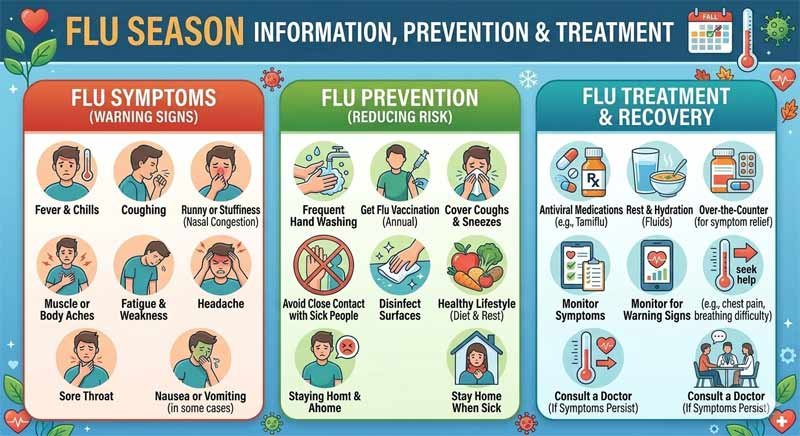
By now we are all familiar with COVID-precautionary measures. These same practices can prBy now, we are all familiar with COVID precautionary measures. These same practices can protect you from getting the flu. Remember:
- Avoid people who are sick with flu-like symptoms.
- Stay home if you have flu-like symptoms to prevent others from getting sick.
- Wash your hands often with soap and water.
- Cover your nose and mouth when you cough or sneeze.
- Avoid touching your face, eyes, and mouth.
- Regularly clean and disinfect commonly used surfaces.
All of these steps will help, but getting a flu shot is the best way to protect yourself from flu illness and complications. The flu vaccine is safe and effective for most people. Talk to your health care provider about getting a flu shot before flu season starts. Remember to:
- Avoid people who are sick with flu-like symptoms.
- Stay home if you have flu-like symptoms to avoid getting others sick.
- Wash your hands often with soap and water.
- Cover your nose and mouth when you cough or sneeze.
- Avoid touching your face, eyes, and mouth.
- Regularly clean and disinfect commonly used surfaces.
All these measures will help, but getting the flu vaccine is the best way to protect yourself from influenza illness and complications. The flu vaccine is safe and effective for most people. Talk to your healthcare provider about getting the flu vaccine before the flu season begins.
Conclusion
Flu season actually lasts all fall, winter, and part of spring in the United States. The flu season remains relatively constant from year to year, but it is difficult to predict whether a season will be severe. Getting a flu shot is the best way to protect yourself against the flu.