Understanding the essential nutrients your body needs is one of the most important steps toward maintaining long-term health and preventing chronic disease. Every cell, tissue, and organ relies on nutrients from the foods you eat to function properly. These nutrients support everything from energy production and immune function to muscle growth, brain health, bone strength, and heart health.
Essential Nutrients Your Body Needs
Unfortunately, many Americans fall short of meeting their daily nutritional needs due to busy schedules, frequent consumption of processed foods, oversized restaurant meals, and diets low in fruits, vegetables, whole grains, and other nutrient-rich foods. While calorie intake may be sufficient—or even excessive—many diets still lack key vitamins, minerals, fiber, and healthy fats needed for optimal wellness.
According to the U.S. Department of Agriculture (USDA), the National Institutes of Health (NIH), and the Centers for Disease Control and Prevention (CDC), following a balanced eating pattern rich in whole foods is one of the most effective ways to obtain the essential nutrients your body requires. Good nutrition not only supports daily energy but also reduces the risk of conditions such as heart disease, type 2 diabetes, osteoporosis, obesity, and certain nutrient deficiencies.
This comprehensive guide explains the essential nutrients your body needs, why they matter, common signs of deficiencies, the best food sources, and practical strategies to help you build a healthier diet.
What Are Essential Nutrients?
Essential nutrients are substances your body cannot produce in sufficient amounts—or cannot produce at all—so they must be obtained through food and beverages.
These nutrients are required for normal growth, development, metabolism, and overall health.
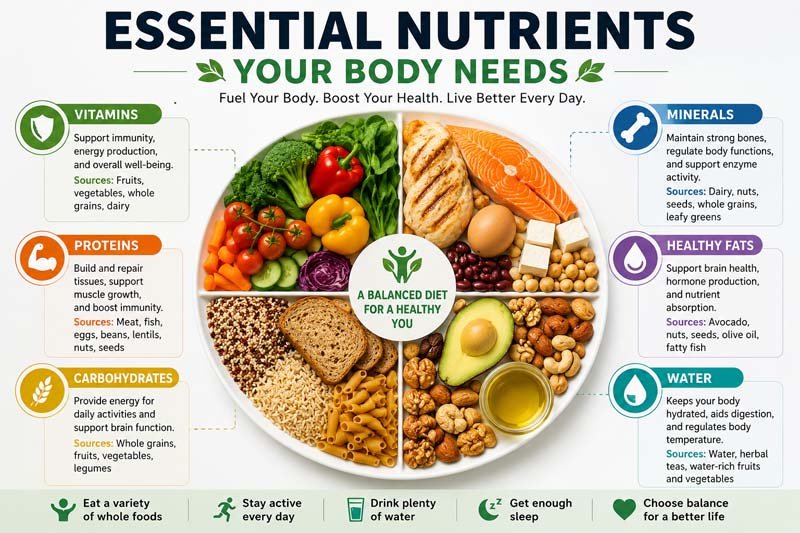
The six major categories of essential nutrients include:
- Carbohydrates
- Protein
- Healthy fats
- Vitamins
- Minerals
- Water
Fiber, although not technically classified as an essential nutrient, also plays a vital role in digestive health, heart health, and blood sugar management.
Each nutrient performs unique functions, and no single food provides everything your body needs. Eating a wide variety of nutrient-dense foods is the best way to meet daily nutritional requirements.
Causes and Risk Factors for Nutrient Deficiencies
Although severe nutrient deficiencies are less common in the United States than in many other parts of the world, mild deficiencies and inadequate nutrient intake remain widespread.
Highly Processed Diets – Ultra-processed foods often contain excessive amounts of sodium, added sugars, and unhealthy fats while providing relatively few vitamins and minerals.
Low Fruit and Vegetable Intake – Many adults do not consume the recommended daily servings of fruits and vegetables, reducing their intake of vitamins, antioxidants, and fiber.
Restrictive Diets – Eliminating entire food groups without proper planning may lead to deficiencies in protein, calcium, iron, vitamin B12, or other nutrients.
Aging – As people age, nutrient absorption may decline, while requirements for certain vitamins and minerals may increase.
Digestive Disorders – Conditions such as celiac disease, inflammatory bowel disease, or gastrointestinal surgery can reduce nutrient absorption.
Chronic Medical Conditions – Some chronic illnesses and medications interfere with nutrient metabolism or increase nutritional needs.
Excessive Alcohol Consumption – Heavy alcohol use may reduce the absorption of several essential nutrients.
Food Insecurity – Limited access to nutritious foods can make it difficult to maintain a balanced diet.
Also visit – Best Morning Drinks for Weight Loss Guide
Signs and Symptoms of Nutrient Deficiencies
Deficiency symptoms vary depending on which nutrient is lacking, but common warning signs include:
- Persistent fatigue
- Muscle weakness
- Frequent illness
- Slow wound healing
- Hair loss
- Brittle nails
- Dry skin
- Difficulty concentrating
- Mood changes
- Muscle cramps
- Bone pain
- Poor night vision
- Digestive problems
These symptoms may also result from other medical conditions. Consult a healthcare provider for proper evaluation if symptoms persist.
Benefits of Getting Essential Nutrients
Meeting your daily nutrient needs supports nearly every aspect of physical and mental health.
Supports Energy Production – Carbohydrates, healthy fats, proteins, and B vitamins help convert food into usable energy for daily activities.
Strengthens the Immune System – Nutrients such as vitamins A, C, D, E, zinc, selenium, and protein help support immune function and the body’s natural defense systems.
Maintains Healthy Bones – Calcium, vitamin D, magnesium, phosphorus, and vitamin K all contribute to strong bones and help reduce the risk of osteoporosis.
Supports Heart Health – Healthy fats, potassium, fiber, and antioxidants may help support healthy blood pressure and cholesterol levels.
Improves Brain Function – Omega-3 fatty acids, B vitamins, iron, iodine, and other nutrients contribute to healthy cognitive function and nervous system health.
Promotes Healthy Digestion
Fiber, water, and probiotics help support regular bowel movements and digestive comfort.
Supports Healthy Weight Management – A nutrient-rich diet emphasizes satisfying whole foods that help control appetite while providing fewer empty calories.
Enhances Healthy Aging – Adequate nutrition helps preserve muscle mass, bone density, immune function, and cognitive health as people age.
Best Natural Solutions for Meeting Your Nutrient Needs
While supplements may be necessary for certain individuals, most healthy adults can meet their nutritional needs through balanced eating habits.
Eat a Variety of Whole Foods
Choose foods from every major food group to increase nutrient diversity.
Include:
- Fruits
- Vegetables
- Whole grains
- Lean proteins
- Dairy or fortified alternatives
- Healthy fats
Fill Half Your Plate with Fruits and Vegetables
Colorful produce provides vitamins, minerals, antioxidants, and fiber.
Aim for a variety of colors each week, including:
- Dark leafy greens
- Orange vegetables
- Red berries
- Purple grapes
- Yellow peppers
Choose Whole Grains
Whole grains provide more nutrients and fiber than refined grains.
Examples include:
- Oatmeal
- Brown rice
- Quinoa
- Whole-wheat bread
- Whole-grain pasta
Include Lean Protein
Protein-rich foods support muscles, hormones, immune function, and tissue repair.
Healthy options include:
- Chicken
- Turkey
- Fish
- Eggs
- Greek yogurt
- Beans
- Lentils
- Tofu
Stay Hydrated
Water is essential for digestion, circulation, temperature regulation, and cellular function.
Most adults should drink water consistently throughout the day, adjusting intake based on activity level and climate.
Limit Added Sugars
Reducing sugary beverages, desserts, and processed snacks leaves more room for nutrient-dense foods.
Best Foods for Americans
Choosing nutrient-rich foods can help Americans meet daily nutritional recommendations while supporting overall health.
Also visit – Healthy Breakfast Ideas for a Strong and Energetic Start
Leafy Green Vegetables
Examples:
- Spinach
- Kale
- Swiss chard
- Collard greens
Key nutrients:
- Vitamin K
- Folate
- Iron
- Calcium
- Magnesium
- Fiber
Health benefits:
- Supports bone health
- Promotes heart health
- Provides antioxidants that help protect cells
Berries
Examples:
- Blueberries
- Strawberries
- Raspberries
- Blackberries
Key nutrients:
- Vitamin C
- Fiber
- Antioxidants
Benefits:
- Supports immune health
- Promotes heart health
- May help reduce inflammation
Citrus Fruits
Examples:
- Oranges
- Grapefruit
- Lemons
- Limes
Rich in:
- Vitamin C
- Potassium
- Water
Benefits:
- Supports collagen production
- Promotes immune function
- Helps maintain hydration
Salmon
Salmon is one of the most nutrient-dense protein sources available.
Provides:
- High-quality protein
- Omega-3 fatty acids
- Vitamin D
- Selenium
- Vitamin B12
Benefits:
- Supports heart health
- Promotes brain function
- Helps reduce inflammation
The American Heart Association recommends eating fatty fish at least twice weekly.
Eggs
Eggs provide complete protein and numerous essential nutrients.
Contain:
- Protein
- Choline
- Vitamin B12
- Vitamin D
- Selenium
Benefits:
- Supports brain health
- Promotes muscle maintenance
- Highly versatile and affordable
Greek Yogurt
Greek yogurt contains:
- Protein
- Calcium
- Vitamin B12
- Probiotics
Benefits:
- Supports digestive health
- Helps maintain bone strength
- Promotes satiety
Choose plain varieties with little or no added sugar.
Beans and Lentils
Examples:
- Black beans
- Kidney beans
- Chickpeas
- Lentils
Provide:
- Plant protein
- Fiber
- Iron
- Magnesium
- Folate
Benefits:
- Support digestive health
- Help regulate blood sugar
- Promote heart health
Nuts and Seeds
Healthy choices include:
- Almonds
- Walnuts
- Pistachios
- Pumpkin seeds
- Chia seeds
- Flaxseeds
Rich in:
- Healthy fats
- Protein
- Vitamin E
- Magnesium
- Fiber
Benefits:
- Promote heart health
- Support brain function
- Increase satiety
Because they are calorie-dense, enjoy moderate portions.
Whole Grains
Examples:
- Oats
- Brown rice
- Quinoa
- Barley
- Whole-wheat bread
Provide:
- Fiber
- B vitamins
- Iron
- Magnesium
Benefits:
- Improve digestive health
- Support stable energy levels
- Help lower cholesterol
Sweet Potatoes
Sweet potatoes are rich in:
- Vitamin A (beta-carotene)
- Potassium
- Fiber
- Vitamin C
Benefits:
- Supports eye health
- Promotes immune function
- Provides long-lasting energy
Avocados
Avocados contain:
- Heart-healthy monounsaturated fats
- Potassium
- Folate
- Fiber
- Vitamin E
Benefits:
- Support cardiovascular health
- Promote satiety
- Help the body absorb fat-soluble vitamins
Sample One-Day Nutrient-Dense Meal Plan
Breakfast
- Plain Greek yogurt topped with blueberries, strawberries, chia seeds, and sliced almonds
- One slice of whole-grain toast
- Water or unsweetened herbal tea
Morning Snack
- Apple with natural peanut butter
Lunch
- Grilled chicken breast
- Quinoa
- Mixed green salad with tomatoes, cucumbers, carrots, and olive oil vinaigrette
Afternoon Snack
- Baby carrots with hummus
Dinner
- Baked salmon
- Roasted sweet potatoes
- Steamed broccoli
Evening Snack
- Cottage cheese with fresh berries
This meal plan provides a balanced mix of protein, healthy fats, fiber, vitamins, minerals, and complex carbohydrates to help meet daily nutritional needs while supporting overall health.
Also visit – Best Foods for Weight Loss: A Complete Healthy Eating Guide
Common Mistakes to Avoid
Even people who try to eat healthy can unknowingly limit their nutrient intake. Avoid these common mistakes to get the most from your diet.
Relying on Supplements Instead of Food
Dietary supplements can help in certain situations, but they should not replace a balanced diet. Whole foods provide fiber, antioxidants, and beneficial plant compounds that supplements cannot fully replicate.
Skipping Meals
Skipping meals may reduce your intake of important nutrients and lead to overeating later in the day.
Aim for regular, balanced meals that include protein, healthy fats, whole grains, fruits, and vegetables.
Eating Too Many Ultra-Processed Foods
Highly processed foods are often high in added sugars, sodium, and unhealthy fats while being low in vitamins, minerals, and fiber.
Limit foods such as:
- Sugary drinks
- Packaged desserts
- Chips
- Fast food
- Processed meats
Avoiding Healthy Fats
Some people mistakenly eliminate all fats from their diets.
Healthy fats from foods like avocados, nuts, seeds, olive oil, and fatty fish are essential for brain health, hormone production, and the absorption of fat-soluble vitamins (A, D, E, and K).
Ignoring Portion Sizes
Even nutritious foods should be consumed in appropriate portions. A balanced diet is about quality and moderation.
Not Reading Nutrition Labels
Nutrition Facts labels can help you identify foods that are high in:
- Added sugars
- Sodium
- Saturated fat
They also help you compare products and make healthier choices.
Risks and Precautions
Although obtaining nutrients through food is generally safe, there are situations where caution is necessary.
Excessive Supplement Use
Taking high doses of vitamins or minerals without medical guidance can cause harmful side effects.
For example:
- Too much vitamin A may damage the liver.
- Excess iron can be toxic.
- High doses of vitamin D may increase blood calcium levels.
Always follow recommended dosages and consult a healthcare provider before taking supplements.
Food Allergies
Common food allergens include:
- Milk
- Eggs
- Fish
- Shellfish
- Peanuts
- Tree nuts
- Soy
- Wheat
Read ingredient labels carefully if you have food allergies.
Special Dietary Needs
Pregnant women, older adults, athletes, and individuals with chronic medical conditions may have different nutrient requirements.
A registered dietitian or healthcare provider can help develop a personalized nutrition plan.
Medical Conditions
Certain health conditions may require dietary modifications. For example:
- Kidney disease may require adjustments to protein, potassium, or phosphorus intake.
- Diabetes requires attention to carbohydrate quality and portion sizes.
- Osteoporosis may increase calcium and vitamin D needs.
Always follow medical advice for your specific condition.
Expert Tips for Meeting Your Daily Nutrient Needs
Eat the Rainbow
Aim to include colorful fruits and vegetables every day. Different colors provide different vitamins, minerals, and antioxidants.
Build Balanced Plates
For most meals, try this simple approach:
- Half the plate: Fruits and vegetables
- One-quarter: Lean protein
- One-quarter: Whole grains
Add a serving of healthy fats such as avocado, olive oil, or nuts.
Plan Meals Ahead
Meal planning reduces reliance on fast food and makes it easier to include nutrient-rich ingredients throughout the week.
Choose Healthy Snacks
Examples include:
- Greek yogurt
- Fresh fruit
- Mixed nuts
- Cottage cheese
- Hummus with vegetables
- Hard-boiled eggs
Cook More Meals at Home
Home cooking allows you to control ingredients, portion sizes, sodium, and added sugars.
Schedule Preventive Health Visits
Routine medical checkups can help identify nutrient deficiencies, chronic conditions, or dietary concerns before they become serious.
Frequently Asked Questions
What are the six essential nutrients your body needs?
The six essential nutrients are carbohydrates, protein, fats, vitamins, minerals, and water. Together, they support growth, energy production, immune function, and overall health.
Which nutrient is most important?
No single nutrient is more important than the others. Your body needs all essential nutrients working together to function properly.
How can I get all the nutrients my body needs naturally?
Eat a balanced diet that includes fruits, vegetables, whole grains, lean proteins, healthy fats, and plenty of water. Variety is key to meeting nutritional needs.
What are the signs of nutrient deficiency?
Common symptoms include fatigue, muscle weakness, hair loss, brittle nails, frequent illness, poor concentration, slow wound healing, and dry skin. Consult a healthcare provider if symptoms persist.
Do I need to take a multivitamin every day?
Many healthy adults can meet their nutritional needs through food alone. However, some people may benefit from supplements based on age, pregnancy, dietary restrictions, or medical conditions.
Which foods contain the most nutrients?
Some of the most nutrient-dense foods include leafy greens, berries, salmon, eggs, Greek yogurt, beans, lentils, nuts, seeds, sweet potatoes, and whole grains.
How much water should I drink each day?
Hydration needs vary based on age, activity level, and climate. Drinking water consistently throughout the day and paying attention to thirst is a practical approach for most healthy adults.
Can processed foods provide essential nutrients?
Some processed foods are fortified with vitamins and minerals, but whole foods generally provide a broader range of nutrients, fiber, and beneficial plant compounds.
Are plant-based diets nutritionally complete?
Yes. Well-planned vegetarian and vegan diets can provide all essential nutrients, though vitamin B12, vitamin D, iron, calcium, iodine, and omega-3 fatty acids may require special attention.
What is the healthiest overall eating pattern?
Eating patterns such as the Mediterranean diet and the DASH diet emphasize nutrient-dense whole foods and are associated with improved heart health and overall wellness.
Conclusion
Understanding the essential nutrients your body needs empower you to make healthier choices every day. Nutrient-rich foods provide the vitamins, minerals, protein, healthy fats, carbohydrates, and hydration your body depends on to function at its best. By focusing on a balanced eating pattern, limiting ultra-processed foods, staying active, and practicing other healthy lifestyle habits, you can improve your energy, strengthen your immune system, support long-term health, and reduce your risk of chronic disease. Small, consistent improvements to your daily nutrition can lead to meaningful health benefits over time.