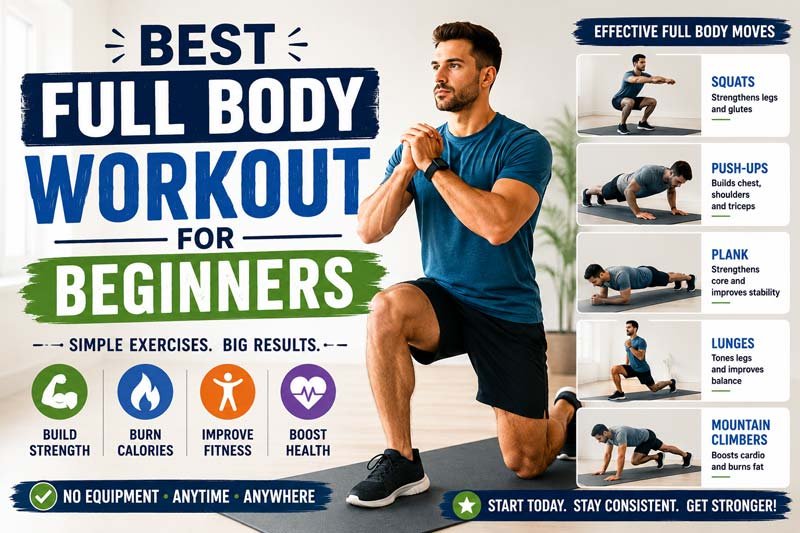
Finding the best full body workout for beginners can feel overwhelming, especially if you’re new to exercise or returning after a long break. Many people find it difficult to decide which workouts are safe, efficient, and long-lasting due to the abundance of online fitness programs.
The good news is that beginners can increase their fitness without costly gym subscriptions or intricate routines. By focusing on all of the major muscle groups in a single session, a well-designed full-body workout can promote general health, boost strength, increase endurance, and burn calories.
The Ultimate Full Body Workout For Beginners
Regular physical activity is a crucial part of a healthy lifestyle, according to health groups like the American Heart Association, the National Institutes of Health (NIH), and the Centers for Disease Control and Prevention (CDC). Full body exercises are an effective strategy to reach fitness objectives for adults with sedentary occupations, long commutes, and limited time.
Everything newcomers need to know about full body workouts is covered in this guide, including advantages, suggested exercises, dietary advice, and professional guidance for sustained success.
Also Visit – Best Sleep Habits for Better Health
What Is the Best Full Body Workout for Beginners?
A full body workout is a training plan that focuses on all of the body’s major muscle groups in a single workout.
These muscle groups include:
- Chest
- Back
- Shoulders
- Arms
- Core
- Glutes
- Quadriceps
- Hamstrings
- Calves
A beginner full body workout incorporates various exercises that work multiple muscles simultaneously, as opposed to exercising just one body component each day.
This approach is particularly beneficial for beginners because it:
- Optimizes the burning of calories
- Enhances general strength
- Improves coordination
- Shortens the time spent exercising
- Encourages the development of balanced muscles
Two to four full-body workouts each week can yield good results for most beginners.
Causes and Risk Factors of Poor Physical Fitness
Due to contemporary lifestyle choices, a large number of American people suffer from low levels of fitness.
Sedentary Work Environments
Every day, millions of Americans sit at workstations for eight or more hours.
Lack of Physical Activity
Millions of Americans spend eight or more hours a day at their desks.
Poor Nutrition
Eating processed foods and fast food frequently can have a negative effect on fitness.
Chronic Stress
Stress might lower energy and motivation for exercise.
Insufficient Sleep
Exercise performance, metabolism, and recuperation are all impacted by sleep deprivation.
Aging
Regular exercise is becoming more and more crucial due to age-related muscle loss.
Signs and Symptoms of Poor Fitness
Insufficient exercise regularly may lead to:
- Low levels of energy
- Breathlessness while engaging in activities
- Diminished strength of muscles
- Gaining weight
- Bad posture
- Stiffness in the joints
- Climbing stairs is difficult.
- Increased blood pressure
- Diminished adaptability
- An increase in weariness
Many of these problems can be resolved by increasing fitness through full-body exercises.
Benefits of Addressing Poor Fitness
There are several health advantages to doing the finest complete body workout for beginners.
Improved Strength
Strengthening bones and muscles is facilitated by resistance training.
Better Heart Health
Frequent exercise promotes cardiovascular health and normal blood pressure.
Increased Calorie Burn
Exercises for the entire body work several muscle groups at once.
Weight Management
A proper energy balance is facilitated by exercise.
Enhanced Mobility
Joint function and flexibility are enhanced by movement.
Better Mental Health
Exercise can improve emotional health and lower stress.
Improved Functional Fitness
Increased strength and endurance make daily tasks easier.
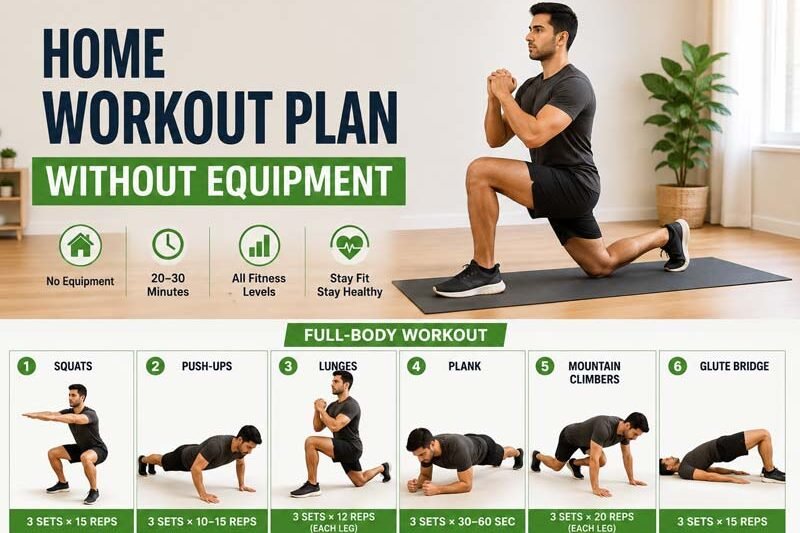
Beginner Full Body Workout Routine
- Do ten to fifteen repetitions of each exercise.
- Finish two or three rounds.
- Between rounds, take a 60- to 90-second break.
1. Bodyweight Squats
Targets:
- Quadriceps
- Hamstrings
- Glutes
- Core
Benefits:
- Increases strength in the lower body
- Enhances mobility
2. Push-Ups
Beginners should perform modified knee push-ups.
Targets:
- Chest
- Shoulders
- Triceps
Benefits:
Gains strength in the upper body
3. Glute Bridges
Targets:
- Glutes
- Hamstrings
- Core
Benefits:
Promotes the health of the lower back
4. Bent-Over Dumbbell Rows
Targets:
- Upper back
- Lats
- Biceps
Benefits:
Enhances posture
5. Step-Ups
Make use of a stable platform that is about 8 to 12 inches high.
Targets:
- Legs
- Glutes
- Core
Benefits:
Enhances coordination and balance
6. Plank Hold
Hold for 20–30 seconds.
Targets:
- Core
- Shoulders
- Back
Benefits:
– Improves stability
7. Dumbbell Shoulder Press
Targets:
- Shoulders
- Triceps
Benefits:
Increases strength in the upper body
8. Walking
For active recuperation, walk for five to ten minutes afterward.
Weekly Beginner Schedule
| Monday | Full Body Workout |
| Tuesday | 30-minute walk |
| Wednesday | Full Body Workout |
| Thursday | Stretching or yoga |
| Friday | Full Body Workout |
| Saturday | Outdoor activity |
| Sunday | Recovery day |
The CDC’s guidelines for frequent physical activity are in line with this schedule.
Also Visit – Best Morning Workout for Weight Loss
Best Foods for Americans Supporting Workout Performance
Nutrition and exercise combine to support outcomes.
Eggs
Superior protein to aid with muscle repair.
Greek Yogurt
offers probiotics and protein.
Oatmeal
provides long-lasting energy from complex carbs.
Chicken Breast
a source of lean protein.
Salmon
Contains omega-3 heart-healthy fatty acids.
Sweet Potatoes
Give them complex carbohydrates and vitamins.
Berries
abundant in antioxidants.
Brown Rice
Support the energy requirements for physical activity.
Nuts and Seeds
Include protein and good fats.
Leafy Greens
Give them fiber, vitamins, and minerals.
Also Visit – 10 Foods That Burn Belly Fat Fast Naturally | Weight Loss Tips
Best Lifestyle Changes for Workout Success
Prioritize Sleep
The recommended sleep duration for adults is seven to nine hours per night.
Stay Hydrated
Water should be consumed regularly throughout the day.
Reduce Sitting Time
Throughout the working day, stand and move frequently.
Manage Stress
Social support, physical activity, and mindfulness can all be beneficial.
Track Progress
Accountability is increased by keeping an eye on workouts.
Build Consistency
Long-term practices yield enduring outcomes.
Common Mistakes to Avoid
Many beginners make blunders that impede their advancement.
Doing Too Much Too Soon
Increase the intensity of your workouts gradually.
Skipping Warm-Ups
Warm-ups get joints and muscles ready for action.
Using Poor Form
The risk of harm is increased by improper technique.
Ignoring Recovery
It takes time for muscles to heal and become more powerful.
Not Eating Enough Protein
Muscle repair is aided by protein.
Comparing Yourself to Others
Pay attention to your personal development.
Inconsistent Workouts
More important than perfection is consistency.
Neglecting Hydration
Exercise performance can be lowered by dehydration.
Risks and Precautions
Exercise is generally safe, but there are some crucial precautions to take.
- If you have any health issues, speak with your doctor before starting a new workout plan.
- Exercise volumes should be reasonable at first.
- If you get significant shortness of breath, dizziness, or chest pain, stop exercising.
- Wear the appropriate equipment and shoes. Prioritize technique over increasing resistance.
Safety and gradual advancement should be the top priorities for beginners.
Expert Tips for Beginners
Focus on Movement Quality
Lifting bigger weights is not as crucial as using proper form.
Start Small
There are significant advantages to even two sessions each week.
Set Realistic Goals
Strive for steady progress.
Track Your Progress
Keep track of the weights, sets, and repetitions.
Celebrate Small Wins
To stay motivated, acknowledge your progress.
Prioritize Recovery
Gaining fitness requires rest.
Stay Patient
Time and consistency are necessary for results.
Enjoy the Process
Select pursuits that you truly enjoy.
Frequently Asked Questions
Which full-body exercise is ideal for beginners?
To target all main muscle groups, a beginner-friendly exercise usually consists of squats, push-ups, rows, glute bridges, planks, and walking.
How often should beginners work out their entire body each week?
Two to four sessions per week, with recovery days in between, are beneficial for most beginners.
Can a full-body workout help me gain muscle?
Yes, when paired with a healthy diet and progressive overload, full-body workouts can successfully increase muscle mass.
What is the ideal duration for a beginner’s workout?
The majority of basic courses take 30 to 60 minutes to finish.
Do I have to be a member of a gym?
No. Bodyweight exercises and little equipment are used in many successful starter workouts.
Do beginners need to use weights?
Although bodyweight workouts are a great place to start, light dumbbells can help develop strength.
Do full-body exercises aid in weight loss?
Indeed. Full-body exercises can help promote good weight management when paired with a balanced diet.
After working out, what should I eat?
A protein and carbohydrate-rich supper can aid in recuperation.
When can I expect to get results?
After a few weeks of regular exercise, many beginners report gains in strength, endurance, and energy.
Conclusion
An easy, efficient, and long-lasting complete body workout is ideal for beginners. Beginners can develop strength, enhance cardiovascular fitness, and promote general wellness by concentrating on fundamental exercises like squats, push-ups, rows, glute bridges, and planks.
A full-body exercise plan can assist in building long-lasting health advantages and a stronger, more active lifestyle when combined with a good diet, enough sleep, and persistent effort.